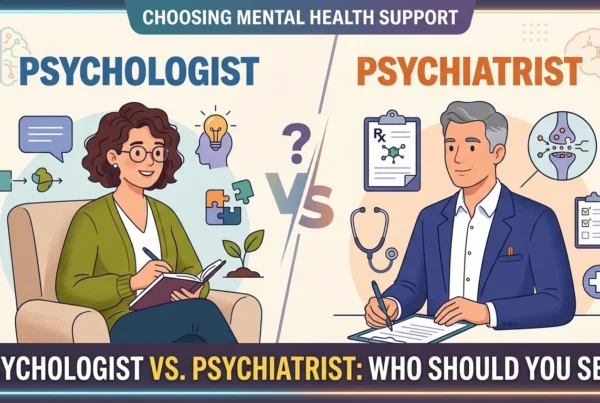

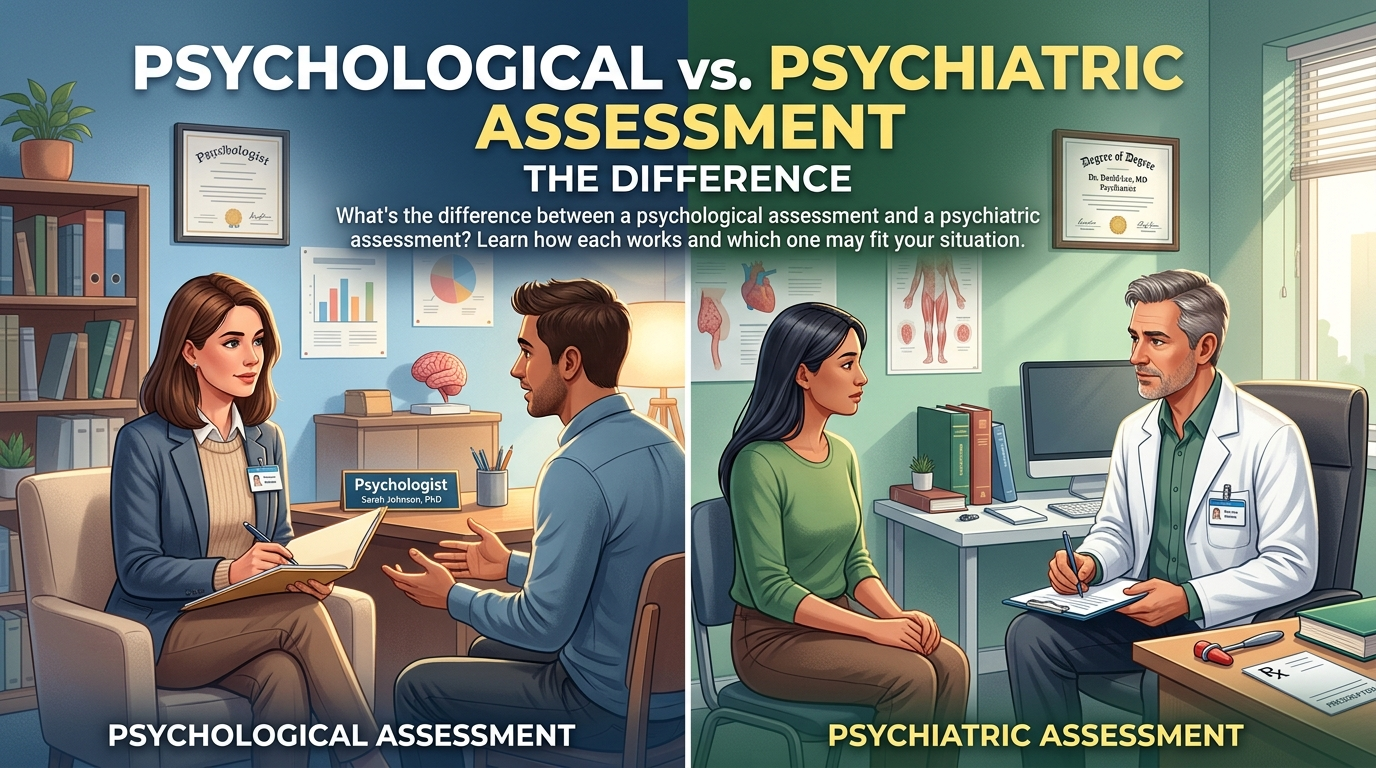
In everyday language these two terms are used almost interchangeably — and there’s reason for it: both are assessing mental health, both performed by trained professionals, and both can result in a diagnosis. However, psychological assessment and psychiatric assessment are two different processes, carried out by different types of professionals, using different methods, and for different purposes.
Knowing the difference can help you determine which one really applies to you, or if you can use both!
The Core Difference: Who Conducts Each One
A psychologist is an individual who has obtained training in psychological testing, cognitive and emotional function and behavior assessment, and conducts a psychological examination. A psychiatric evaluation is performed by a psychiatrist, a medical doctor trained in psychiatric medicine and who may also prescribe and monitor psychiatric medications.
This difference in training influences the focus of each type of assessment and each profession’s tools.
Different Training, Different Lenses
Each team has a distinct view of training. There is a different perspective of training within each team. Psychologists do not typically prescribe medicine, and they receive their training in psychological theory, testing, and therapy. As physicians, psychiatrists think about mental health in the context of a physical illness, and may assess whether a physical illness or medication may be contributing to a patient’s symptoms. Both lenses are not wrong, but rather they are two different aspects of the same issue, sometimes overlapping.
What does a Psychological Assessment Focus On?
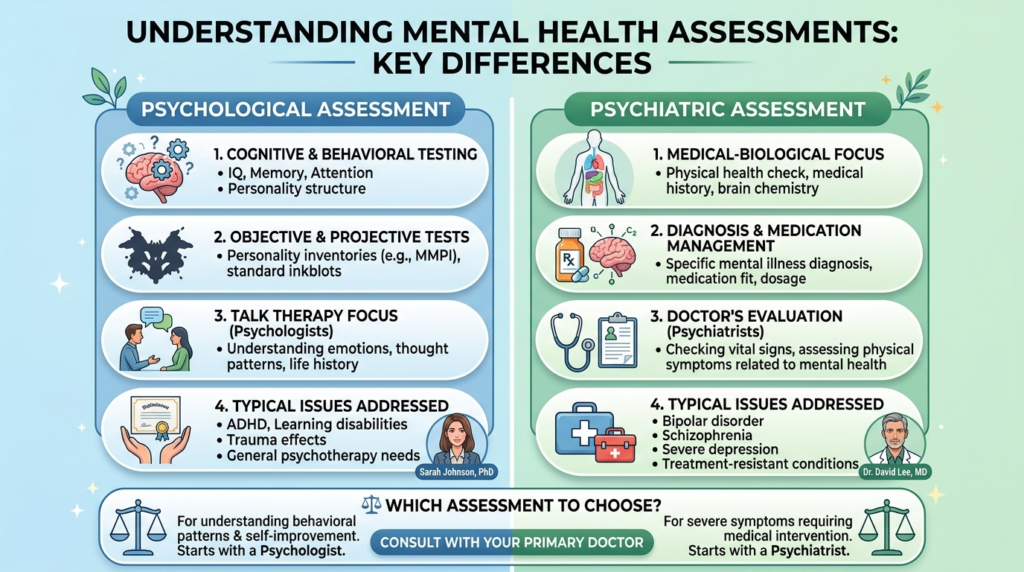
During a psychological assessment, a structured interview, standardized psychological tests, and behavioral observation are used to create a detailed picture of cognitive functioning, patterns of emotions, and behaviors. Usually employed to help clarify issues related to attention, learning, personality functioning or emotional problems and often leads to a detailed written report with findings and recommendations.
Where the aim is to understand functioning, rather than merely determine whether a diagnosis is made or not, this kind of assessment is especially helpful; it is determining how a specific difficulty is manifested in various aspects of a person’s life.
What is a Psychiatric Assessment Focuses On?
A psychiatric evaluation is more focused on diagnosis in a medical setting, as well as, possibly, whether or not someone would benefit from medication as a treatment. It usually includes a clinical interview (meeting) in which symptoms and history are discussed as well as medical factors and may involve or lead to blood tests or other medical examination to exclude physical causes of psychological symptoms.
Psychiatric evaluations are more likely to focus on the diagnosis and medical management, while psychological evaluations are more likely to delve into patterns of cognitive and emotional functioning.
When Each One Is Typically Recommended?
When the inquiry is about the nature of the functioning in detail, such as whether attention problems are indicative of ADHD or whether a persistent pattern of functioning is indicative of a certain personality or emotional profile, a psychological evaluation is usually a good first step. Often a psychiatric evaluation is more appropriate if medication is being considered, if symptoms might have a strong biological component, or if a formal psychiatric diagnosis is necessary for medical reasons.
These are not ‘either-or’ decisions in many instances. A psychologist and psychiatrist may work together, especially if a person needs a thorough understanding of how their mind works as well as a medical evaluation of their options for treatment, including medication.
Do You Need Both?
It may not be necessary for everyone to have both types of assessment. Numerous concern can be resolved entirely with psychological evaluation and psychotherapy without using any medical or pharmacological treatment. Others do better with a combination of both, especially if the symptoms are very noticeable and it is possible to take medication to help the individual function in conjunction with therapeutic intervention.
If you’re not sure, it’s a good idea to talk to a psychologist as part of their job is to advise you if psychiatric involvement is necessary or helpful, and not just assumed.
For situations where both perspectives are useful, collaborative care between psychology and psychiatry allows these two forms of expertise to inform a more complete treatment approach.
Frequently Asked Questions
Yes, psychologists can perform psychological assessment to diagnose a variety of mental health disorders. They are usually not able to prescribe medicines, however, unless drug therapy is being considered, psychiatric involvement is relevant.
Not necessarily. A psychological assessment can be sought directly or may be referred to a psychologist by a psychiatrist, a doctor, or a school, as part of a more comprehensive evaluation.
They are not in any way more accurate, they just show different sides to the same whole. A psychiatric assessment is more specific in medical and diagnostic aspects related to medication and a psychological assessment is more detailed in what it is assessing in relation to cognitive and emotional functioning.
Yes, and this hybrid approach is prevailing, especially for more challenging scenarios. A psychologist can be used in conjunction with a psychiatrist – both can bring their expertise to bear on a common understanding of what will be most beneficial.
When in doubt, it’s a good idea to begin by talking with a psychologist. As a part of the initial consultation process, the type of assessment or support that is appropriate to your concerns, including the need for psychiatric involvement, will be determined.
Take the Next Step
If you’re trying to figure out which type of assessment fits your situation, a conversation with a psychologist is a reasonable place to start.
Book a Consultation to discuss your specific concerns with Yusra Imad, or learn more about Psychological Assessment & Diagnosis and Collaborative Care With Psychiatry.