

When someone chooses to have a psychological assessment, there may be some degree of uncertainty as to what to expect when the appointment comes. Will this be one session or more? Will there be any tests to take? How do they use the results thereafter? The unknown makes the whole thing seem more daunting than it is supposed to be.
This article covers the type of information that a psychological assessment will involve, how the assessment will go from the first appointment to the last feedback session, and what to expect after completing the assessment.
What is a Psychological Assessment?
A psychological assessment is a systematic procedure to gain a deeper understanding than is typically achieved in a one and only assessment session of an individual’s cognitive, emotional and behavioural processes. Usually there are specific concerns to investigate – problems with paying attention, shifting moods, questions about attention or learning problems, or uncertainty about why a set of symptoms is actually happening – using clinical interviews, standard instruments, and, when applicable, questionnaires filled by the individual or people that know them well.
The aim is not to narrow them down to a category. A general discussion isn’t always enough to give a clear view for treatment, support or next steps, so it’s important to build an accurate, evidence-based picture.
Assessment Is Different From an Initial Therapy Consultation
It’s a distinction to make between this and a straight therapy intake which is more ‘discovery’ based and less structured. An assessment process is more clearly outlined, and generally involves specific standardised assessments, and usually does not lead to a written report with clear findings as the initial therapy conversation.
How It Typically Starts?
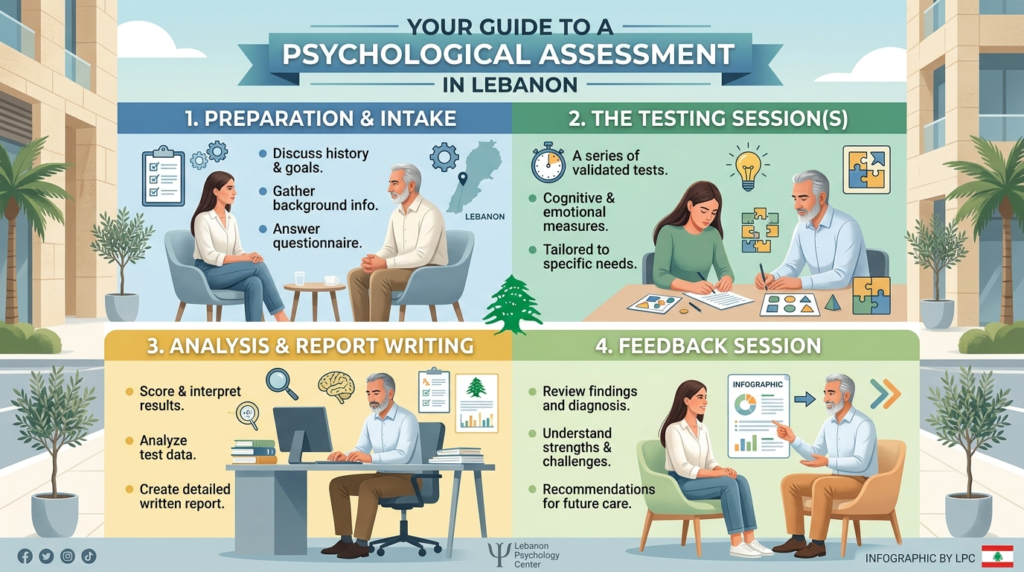
Typically the initial procedure is a clinical interview, during which the psychologist gathers information pertinent to the concerns prompting the assessment, to the history relevant to the issue, and to the context of the evaluation, which will determine which tools and measures to use. This is also a good opportunity for the psychologist to let the individual know what will happen in the future, as to avoid any surprises later on.
This step could also involve obtaining feedback from others who are appropriate for the assessment — such as a partner, family member, or parent or teacher of a child, if that is an assessment of a child. — to expand on the information that is self-reported.
What is the Assessment Sessions?
This usually consists of one or more sessions with a standardized psychological assessment tool or instruments that are appropriate to the focus of the assessment. These can be structured questionnaires, tasks involving cognition or attention, or other validated questionnaire/sensitive to the situation.
Some people are surprised that these sessions can sound more like an actual task to work on than a therapy discussion. That is done by design – that’s how the results can be compared to known standards instead of just accepting a subjective impression.
The number of sessions needed will depend upon what is being evaluated and the amount of detail which is needed to form a picture. A simple, one-on-one evaluation of a limited range of functions could be done sooner than one evaluating several functions simultaneously.
What will be done after the testing?
After evaluation sessions, the psychologist evaluates and interprets the results, combining them with the clinical interview and other information obtained. This is usually done over a few hours after, perhaps with a feedback session scheduled.
The results are discussed right away in the feedback session — what the results mean, how they tie into the concerns asked and where to go from there. This is usually accompanied by a written report summarising the findings, which may be helpful for your sense of understanding and – if you have – for others working in your care.
What an Assessment Can and Can’t tell You?
Instead of just doing an assessment of a child, it can offer beneficial understanding and insight into the cognitive and emotional functions and may be able to differentiate between conditions, which may appear the same at first glance but which need different types of intervention. It generally cannot give guarantees — some results are more unambiguous than others, and a competent psychologist will not give a strong sense of certainty for any particular conclusions, but rather be honest about his confidence about that.
Getting ready for Your Assessment
Generally, there is little specialized preparation needed, except for sufficient rest prior to testing as this condition may alter performance on some tests. Any relevant history is also good to include in the assessment — previous evaluations, school records (if applicable) or a general timeline of when concerns arose — as this can provide context for why the assessment is accurate.
To have specific queries about what the process entails for your specific case is very reasonable and sometimes very helpful in setting expectations during the initial consultation.
If you’re considering an assessment, the Psychological Assessment & Diagnosis page outlines the areas this service typically covers.
Frequently Asked Questions
There are several factors that can affect this, such as what you are evaluating and how many sessions it will take, but the complete process from interview to proper scoring and interpretation—including scheduling and the proper time allowed herein—may take several weeks.
Not always, but sometimes a child is referred by a psychiatrist, physician, or school. In general, direct contact is available to allow for an assessment based on the person’s own concerns.
Usually not. Analysing and interpreting the results of the tests correctly takes time after the tests and is therefore usually done in a dedicated feedback-session following the analysis.
No. A psychological assessment involves standardized questionnaires and interviews and generally is completed by a psychologist looking at the cognitive, emotional and behavioral functioning. Psychiatric review performed by a psychiatrist, and may focus on diagnosis relevant to medication with some psychological assessment data.
Assessments are relevant for both adults and children, depending on the concern. Adults commonly seek assessment for questions around attention, mood, or cognitive functioning, just as children are assessed for developmental or learning-related concerns.
Take the Next Step
If you’re considering a psychological assessment and aren’t sure where to start, an initial conversation can help clarify whether it’s the right step for your specific concerns.
Book a Consultation to speak with Yusra Imad about the psychological assessment process, or learn more on the Psychological Assessment & Diagnosis page.