
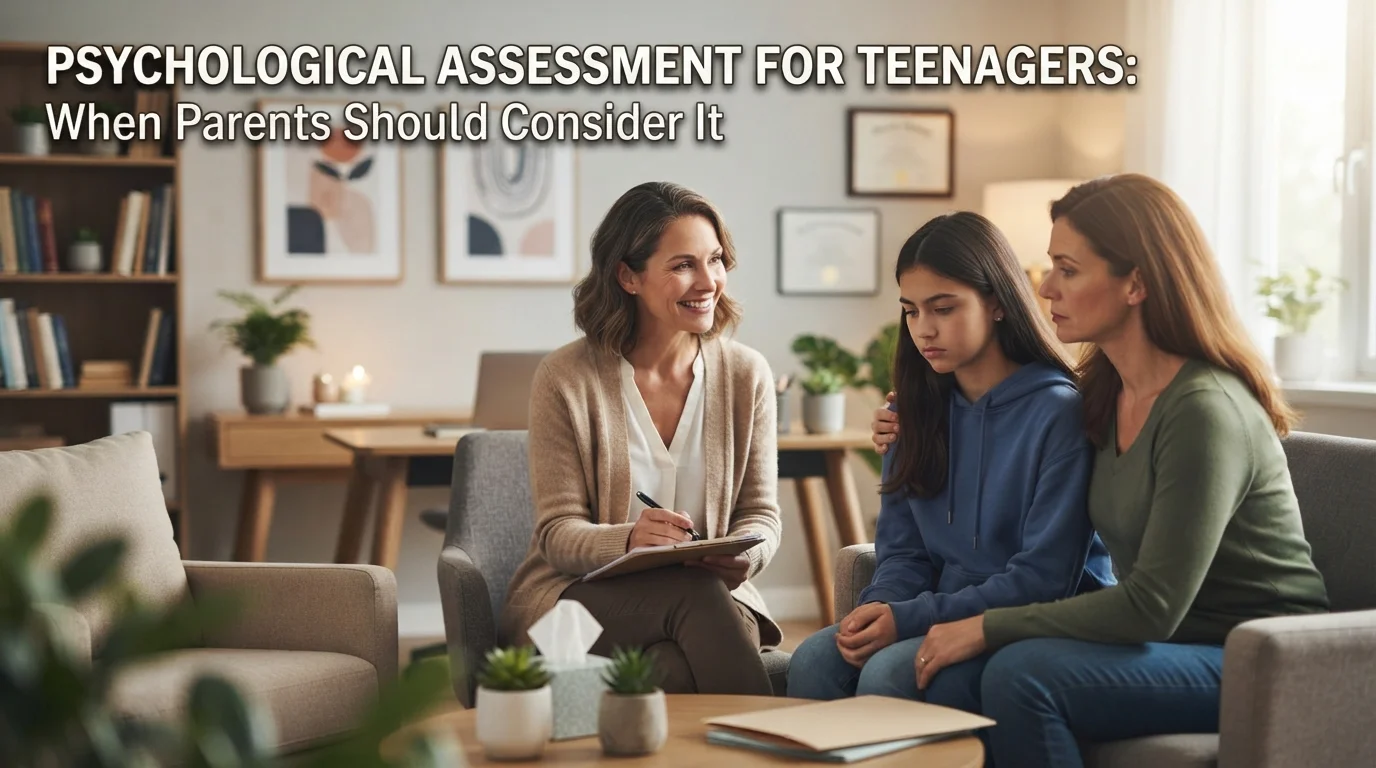
Your teenager’s grades have been slipping for months. They seem more irritable, spend most evenings alone in their room, and conversations quickly turn into arguments. You tell yourself it is just adolescence, yet a quiet worry stays with you: what if it is something more? Many parents in this position feel stuck between overreacting and missing something important. A psychological assessment for teenagers can help answer that question with clarity, so you can respond with understanding rather than guesswork.
This guide is written for parents. It explains what a psychological assessment for adolescents involves, signs that it may be worth considering, what happens during the process, how confidentiality works with teenagers, and how to talk to your son or daughter about it.
What Is a Psychological Assessment for Teenagers?
A psychological assessment for teenagers is a structured evaluation carried out by a qualified psychologist to understand what is behind a young person’s emotional, behavioral, learning or attention difficulties. It combines conversations with the teenager and parents, standardised questionnaires, and sometimes cognitive or academic testing. The aim is not to label your child but to understand them: their strengths, their struggles, and what kind of support would help most.
A psychological assessment can be especially valuable when a teenager’s difficulties are unclear, when several possible explanations overlap, or when previous efforts to help have not worked. For a general overview of the process with adults and adolescents alike, our article on what to expect from a psychological assessment is a helpful starting point.
Normal Teenage Changes or Something More?
Adolescence is a period of rapid change. Teenagers naturally seek more independence, spend more time with friends, experience stronger emotions and sometimes push back against family rules. Brain development continues well into early adulthood, particularly in areas involved in planning and emotional regulation, which helps explain some of the ups and downs of these years.
The question is not whether your teenager is changing, but how much, for how long, and with what impact. Concerns usually deserve attention when changes are intense, last for weeks or months rather than days, appear across several areas of life, or are clearly affecting school, friendships, family relationships or wellbeing. The World Health Organization notes that half of all mental health conditions begin by age 14, yet most cases go undetected and untreated, which is why early attention matters.
Signs a Psychological Assessment May Help
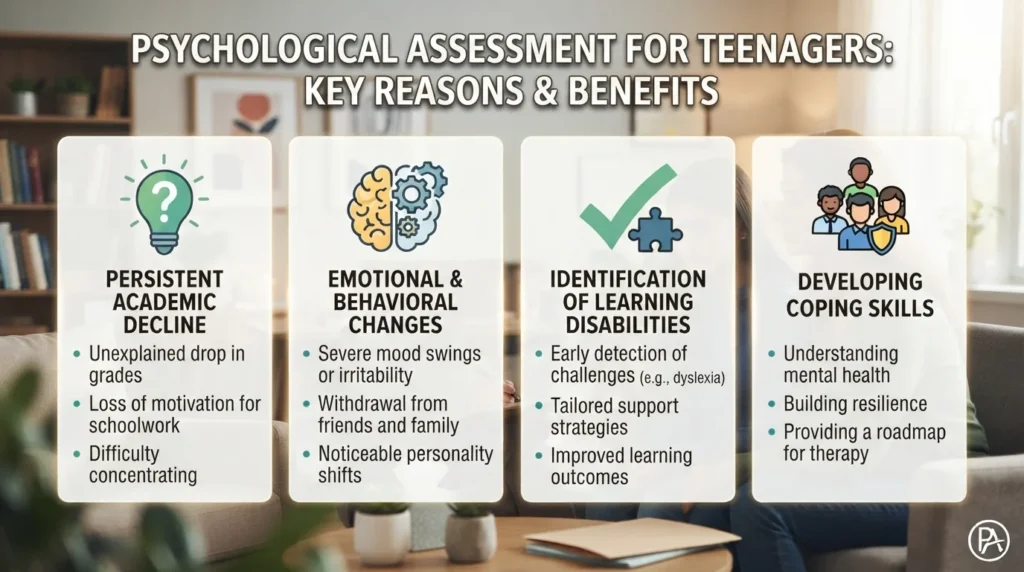
Every teenager is different, but parents commonly seek an adolescent psychological evaluation when they notice patterns such as:
- A significant, persistent drop in school performance or motivation.
- Ongoing difficulties with attention, organisation or finishing tasks.
- Persistent sadness, irritability, anxiety or loss of interest.
- Withdrawal from friends, family or activities they used to enjoy.
- Changes in sleep, appetite or behavior that do not settle.
Learning and School Difficulties
Some teenagers struggle academically despite real effort. Difficulties with reading, writing or mathematics, problems keeping up with the pace of secondary school, or anxiety around exams such as the official Lebanese exams can all affect performance. Many students in Lebanon also learn in two or three languages, which can make it harder to tell whether struggles come from language demands or an underlying learning difficulty. A careful assessment considers both.
Attention and Concentration
Problems with focus, forgetfulness, disorganisation or impulsivity are another common reason for referral. A teen assessment for attention difficulties looks at whether these patterns have been present since childhood, whether they appear across settings, and whether anxiety, low mood or sleep problems might explain them instead.
Mood and Anxiety
Persistent low mood, irritability, worry, panic, or avoidance of school or social situations may point to depression or anxiety. Teenagers often express emotional distress differently from adults, for example through anger, boredom or physical complaints such as headaches and stomach aches, so these signs can be easy to misread.
Behavior and Relationships
Frequent conflict, risk-taking, difficulty managing emotions, or ongoing problems with friendships can also be reasons to seek an assessment. Behavior is often a form of communication, and understanding what lies underneath it is the first step toward helping.
When to Seek Help Urgently?
Some situations need immediate attention rather than waiting for a psychological assessment appointment. If your teenager talks about wanting to die, harming themselves or feeling hopeless; if you notice signs of self-harm; if they seem to be losing touch with reality; or if you are worried about serious substance use or their immediate safety, seek urgent help. Contact local emergency services, go to the nearest hospital emergency department, or reach out to a doctor straight away. Taking these signs seriously is always the right decision.
What Happens During an Adolescent Psychological Evaluation?
The exact process of a psychological assessment for teenagers depends on the questions being explored, but it usually includes several stages.
Meeting With Parents
A psychological assessment for adolescents typically begins with the psychologist meeting parents to understand the concerns, the teenager’s developmental history, school background, family circumstances and any previous evaluations. Parents often have valuable information about early childhood that the teenager cannot provide.
Meeting With Your Teenager
Next, the psychologist meets with the teenager, a central part of any psychological assessment for teenagers, often on their own for at least part of the time. This allows the young person to share their own perspective, which can differ significantly from what parents observe. Many teenagers find it easier to speak openly with a neutral professional than with family members.
Questionnaires and Testing
Depending on the concerns, the psychological assessment may include standardised questionnaires completed by the teenager, parents and sometimes teachers, as well as cognitive or academic tests. Using information from several sources gives a fuller and more reliable picture of how the teenager functions at home, at school and with peers.
Feedback and Recommendations
Finally, the psychologist shares the findings of the psychological assessment, usually with parents and, in an age-appropriate way, with the teenager. Feedback focuses on understanding and next steps, including strengths as well as difficulties. You may also receive a written report; our guide to understanding your psychological assessment report explains how to read it.
Confidentiality and Your Teenager’s Privacy
Confidentiality with teenagers involves a careful balance. Young people are more likely to speak honestly if they trust that what they share will be treated respectfully. At the same time, parents need enough information to support their child, and safety always comes first.
Most psychologists explain the boundaries clearly at the start: what will be shared with parents, what may stay private, and the circumstances in which confidentiality must be set aside, such as serious risk to the teenager’s or someone else’s safety. Discussing these arrangements openly with your teenager helps build trust in the psychological assessment process.
How to Talk to Your Teenager About an Assessment?
Many parents worry about how their teenager will react. A calm, honest approach usually works best. Choose a quiet moment rather than raising it during an argument. Explain what you have noticed and why you are concerned, focusing on care rather than blame, for example: “You seem to be carrying a lot lately, and I want to understand how to help.” Present the psychological assessment as a way to understand them better, not as a punishment or a sign that something is wrong with them.
Invite their questions and, where possible, involve them in decisions such as appointment times. If they are resistant, acknowledge their feelings and give them time. Teenagers often become more open once they meet the psychologist and realise the process is about listening to them.
An Illustrative Example
The following is a composite based on common patterns, not a real family. Jana, 15, was once an enthusiastic student. Over the past year, her grades have fallen, she has stopped attending her dance classes and she spends most evenings in her room. Her parents assumed it was typical teenage behavior until a teacher mentioned she seemed withdrawn and was having trouble concentrating in class.
Through a psychological assessment involving meetings with her parents, private conversations with Jana, questionnaires from Jana, her parents and a teacher, and a review of her school reports, a clearer picture emerges. Jana has been experiencing significant anxiety and low mood since a difficult falling-out with a close group of friends, which has affected her sleep and concentration. There is no sign of a learning difficulty. The recommendations include individual therapy for Jana, guidance for her parents on supporting her at home, and communication with the school about temporary adjustments. With this understanding, her parents feel less helpless and more able to support her.
What Happens After the Assessment?
The value of a psychological assessment lies in what comes next. Recommendations may include individual therapy for your teenager, family sessions to improve communication, strategies for school, suggestions for parents, or referral for medical input where needed. Family involvement is often an important part of supporting adolescents, and our family therapy service is designed for exactly that kind of work. When medical support is relevant, Yusra’s practice offers collaborative care with psychiatry.
Overcoming Hesitation
In Lebanon, as in many places, stigma around mental health can make parents hesitate. Some worry that a psychological assessment means their child will be labelled, that others will find out, or that it reflects badly on their parenting. These concerns are understandable. In reality, seeking a psychological assessment for teenagers is a sign of attentive, caring parenting. Assessments are confidential, and their purpose is to open the right doors for your child, not to define them.
Frequently Asked Questions
A psychological assessment can be carried out at many ages, and the methods are adapted to the young person’s developmental stage. Your psychologist will confirm whether their assessment services are suitable for your teenager’s age.
Involving your teenager and seeking their agreement makes the assessment far more useful, because their honest participation matters. Psychologists usually explain the process to the teenager directly and address their questions and concerns.
Not without your consent. You decide whether to share the report or any recommendations with the school. Sometimes sharing selected recommendations helps the school support your teenager more effectively.
It depends on the concerns being explored. Most assessments involve several sessions, including meetings with parents and the teenager, questionnaires or testing, and a feedback meeting. Your psychologist will give you an estimate at the start.
That can be valuable information in itself. A psychological assessment may show that your teenager is going through a normal but difficult phase, and the recommendations can still help you support them through it with greater confidence.
Understanding Your Teenager Is the First Step
When something seems to be wrong but you cannot quite name it, a psychological assessment for teenagers can bring clarity for the whole family. It helps you understand what your child is experiencing, highlights their strengths, and points toward support that genuinely fits.
If you are worried about your teenager’s mood, behavior, learning or attention, you do not have to figure it out alone. Learn more about psychological assessment and diagnosis in Lebanon, book a confidential consultation, or send a message on WhatsApp with any questions first.
About this article: This content is for general education and does not diagnose or replace individual assessment or treatment. It was reviewed by Yusra Imad, Licensed Clinical Psychologist and CBT Psychotherapist. If your teenager is in immediate danger or talking about harming themselves, contact local emergency services or go to the nearest hospital straight away.
Reviewed by Yusra Imad, Licensed Clinical Psychologist and CBT Psychotherapist in lebanon