

From the outside, your life looks organised. You meet deadlines, remember birthdays, answer messages quickly and are the person others rely on. People describe you as calm, capable, even impressive. What they do not see is the constant hum of tension underneath: the 2 a.m. mental checklists, the dread before ordinary tasks, the feeling that one slip could make everything fall apart. This is what many people mean by high-functioning anxiety, and it is far more common than its quiet nature suggests.
This guide explains what high-functioning anxiety is, the signs that often go unnoticed, where it tends to come from, what it costs over time, and how therapy can help you keep your strengths without the constant strain.
What Is High-Functioning Anxiety?
High-functioning anxiety describes people who experience significant anxiety yet continue to perform well, and often very well, in work, study and daily responsibilities. The anxiety does not stop them from functioning. In many cases, it seems to drive their productivity, which is precisely why it is so easy to overlook.
Not a Formal Diagnosis, but a Real Experience
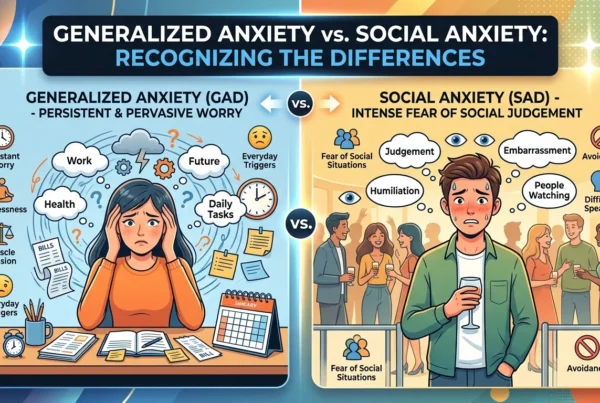
It is important to be clear: high-functioning anxiety is not a diagnosis in the Diagnostic and Statistical Manual of Mental Disorders (DSM-5). It is a descriptive, popular term. Many people who identify with it would, on assessment, meet criteria for a recognised condition such as generalized anxiety disorder or social anxiety disorder. Others experience persistent anxiety that does not fit neatly into a category but still affects their wellbeing. The label matters less than the experience: if you live with constant inner pressure despite outward success, that deserves attention.
Why It Is So Often Missed
Anxiety is usually pictured as something visibly disruptive: avoiding situations, struggling to cope, missing work. High-functioning anxiety looks almost the opposite. Its behaviors, such as over-preparation, attention to detail and reliability, are often praised. Employers reward them, families depend on them, and the person themselves may believe these traits are simply who they are. As a result, many people only seek help when exhaustion, burnout or physical symptoms force the issue.
Common Signs of High-Functioning Anxiety
The signs of high-functioning anxiety tend to split into what other people see and what you experience privately. The gap between the two is often the clearest clue.
What Others Tend to See?
- Punctual, organised and highly prepared, often overly so.
- Hardworking and reluctant to say no to extra responsibilities.
- Detail-oriented, with very high standards.
- Outwardly calm, helpful and dependable in a crisis.
Hidden Anxiety Symptoms on the Inside
Behind that picture, common hidden anxiety symptoms of high-functioning anxiety include near-constant worry, difficulty relaxing even on holidays, overthinking conversations and decisions, fear of disappointing others, and a harsh inner critic that treats small mistakes as disasters. Many people describe feeling like an impostor who will eventually be “found out.” Success brings only brief relief before the next worry arrives. Some notice they cannot sit still without feeling guilty, or that rest feels like something they must earn. If repetitive thinking is a big part of your experience, our guide to CBT for overthinking looks at that pattern in depth.
Physical Signs of High-Functioning Anxiety
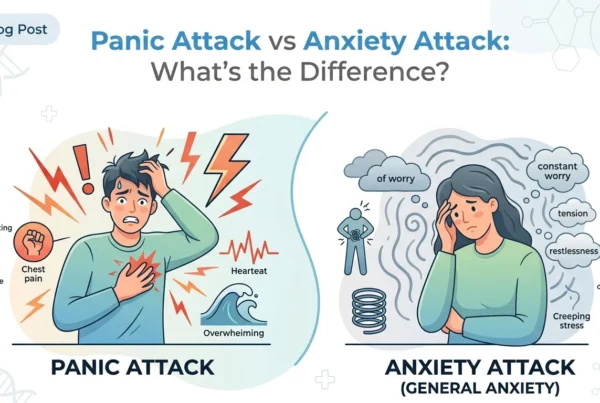
The body often carries what the mind keeps hidden. Tension headaches, tight shoulders and jaw, stomach problems, a racing heart, fatigue and trouble falling or staying asleep are all common. Some people also develop habits such as nail-biting, skin-picking or constantly checking their phone. Because these symptoms are easy to blame on a busy schedule, they are frequently dismissed.
Where High-Functioning Anxiety Comes From
There is rarely a single cause of high-functioning anxiety. Temperament plays a part: some people are naturally more sensitive to threat and uncertainty. Life experiences matter too. Many people with high-functioning anxiety grew up in environments where achievement earned approval, where mistakes felt costly, or where they took on responsibility early, perhaps caring for siblings or managing a parent’s stress.
Over time, these experiences can shape core beliefs such as “My worth depends on what I achieve,” “If I relax, things will fall apart,” or “I must never let anyone down.” These beliefs are rarely spoken aloud, yet they quietly drive behavior. Yusra’s analytical-systemic training is particularly relevant here, because it looks at how family patterns and roles carry into adult life. Understanding where the pressure came from often makes it easier to loosen.
Environment also reinforces the pattern. Competitive workplaces, demanding academic settings and cultures that value constant availability all reward anxious over-functioning, at least in the short term.
The Hidden Costs of High-Functioning Anxiety
Running on high-functioning anxiety can work for a while. Over months and years, though, the costs add up. Chronic tension and poor sleep take a physical toll. Constant striving with little rest is a well-known pathway toward burnout, which we explore in our article What Is Burnout? Relationships can suffer too, as people with high-functioning anxiety often struggle to be fully present, to ask for help, or to let others see them struggling.
Perhaps the most painful cost is the inability to enjoy what you have achieved. Each success is followed by a new target, and satisfaction never quite arrives. Many people say they feel they are living in “survival mode” even when, on paper, life is going well.
High-Functioning Anxiety at Work
Work is often where high-functioning anxiety shows up most clearly. It can look like rewriting an email five times, staying late to perfect work that was already good, avoiding delegating because no one will do it “right,” or feeling sick before routine meetings. Anxiety at work in this form is frequently mistaken for dedication. If workplace pressure is the main trigger for you, our article on anxiety at work and practical strategies that help covers specific steps for managing it day to day.
Is Anxiety the Secret to Your Success?
This is one of the biggest fears people have about addressing high-functioning anxiety: “If I stop worrying, will I stop performing?” It is an understandable concern, but it rests on a misunderstanding. A moderate level of arousal can sharpen focus; psychologists have described this relationship for over a century, often referred to as the Yerkes-Dodson principle. Beyond a certain point, however, high anxiety tends to reduce concentration, decision-making and creativity rather than improve them.
In other words, your skills, effort and care are what produce your results. Anxiety is more like an expensive, unreliable fuel. Therapy is not about removing your drive or high standards. It aims to help you keep the strengths while lowering the internal cost of using them.
An Illustrative Example
The following is a composite based on common patterns, not a real client. Hadi, 38, is a respected lawyer in Beirut. He is known for being thorough and never missing a detail. Privately, he checks his work repeatedly, lies awake reviewing cases, and feels a wave of dread every Sunday evening. He has not taken a full week off in years because he worries something will go wrong in his absence. Recently he has had frequent headaches and has become short-tempered at home.
In therapy, Hadi maps his high-functioning anxiety and recognises a core belief: “If I’m not in control of every detail, I’ll fail and people will lose respect for me.” He traces some of this to his role as the eldest son expected to succeed. Using CBT, he begins testing small changes, such as reviewing a document once instead of four times and noticing what happens. Nothing goes wrong. Over time, he delegates more, sets a cut-off time for work in the evenings and takes a long weekend. His work quality holds steady. His sleep, mood and relationships improve noticeably.
How Therapy Helps High-Functioning Anxiety
Therapy for high-functioning anxiety usually works on several layers at once. Cognitive behavioral therapy helps you identify the thoughts and beliefs that drive over-functioning and test them through small, safe experiments: sending the email without a fifth review, saying no to one extra task, leaving work on time. These experiments often show that the feared consequences rarely happen. You can read more on our page about CBT therapy in Lebanon.
Therapy also addresses the deeper roots: where your sense of worth became tied to performance, and how family roles or past experiences shaped that. Working on self-compassion is often an important part of the process, because a harsh inner critic is one of the strongest engines of high-functioning anxiety. Practical work on boundaries, rest and recovery rounds things out.
In Yusra’s practice, individual psychotherapy integrates CBT with the analytical-systemic approach, so both the day-to-day habits and the underlying patterns can be addressed together.
Small Shifts to Start With
Easing high-functioning anxiety does not have to start with dramatic decisions. Many people find it helpful to begin by noticing the gap between how they appear and how they feel, without judging it. From there, small experiments make a real difference: setting a time limit on a task and stopping when it ends, scheduling short breaks that are not “earned,” replacing “I should” with “I choose to” when deciding whether to take something on, or telling one trusted person how you really feel. Paying attention to physical signals, such as clenched jaw or shallow breathing, and pausing to breathe slowly can also interrupt the anxiety cycle in the moment.
These steps will feel uncomfortable at first. That discomfort is not a sign you are doing something wrong; it is usually a sign you are stepping outside a long-held pattern.
When to Seek Support?
Consider speaking to a psychologist about high-functioning anxiety if worry has become your constant companion, if you cannot relax even when there is time to, if your sleep or health is suffering, or if you feel close to burning out. You do not need to wait for things to fall apart. In fact, people with high-functioning anxiety often benefit greatly from addressing it while they still have the energy to make changes.
Frequently Asked Questions
It is not a formal diagnosis, but it describes a real and common experience. Many people who identify with it would meet criteria for an anxiety condition such as generalized anxiety disorder on assessment. A psychologist can help clarify what fits your situation.
Common signs include constant worry, overthinking, perfectionism, difficulty saying no, trouble relaxing, fear of failure or disappointing others, and physical symptoms such as tension, headaches and poor sleep, all while continuing to perform well outwardly.
Most people find the opposite. Therapy aims to reduce the excessive strain behind your effort, not your ability or motivation. Many people find they work as well or better, with more focus and less exhaustion, once anxiety is no longer running the show.
The two often go together. Perfectionism can fuel anxiety by setting standards that are impossible to meet consistently, while anxiety drives perfectionist behavior as a way to feel safe. Perfectionism anxiety is something therapy can address directly.
It can. Running on constant pressure without enough rest or recovery is a common route to burnout. Recognising the pattern early and building more sustainable habits can help prevent it.
You Don’t Have to Keep Holding It All Together Alone
High-functioning anxiety is easy to hide and easy to dismiss, especially when everything looks fine from the outside. But looking fine and feeling fine are not the same thing. With the right support, it is possible to keep the qualities that make you capable, the care, the commitment, the attention to detail, while letting go of the constant fear that drives them.
If this article sounds familiar, a conversation could be a helpful first step. Learn more about individual psychotherapy in Lebanon, book a confidential consultation, or send a message on WhatsApp with any questions.
About this article: This content is for general education and does not diagnose or replace individual assessment or treatment. It was reviewed by Yusra Imad, Licensed Clinical Psychologist and CBT Psychotherapist, holding CBT certification from ALTCC. If you are in immediate danger or thinking of harming yourself, contact local emergency services or go to the nearest hospital.
Reviewed by Yusra Imad, Licensed Clinical Psychologist and CBT Psychotherapist