
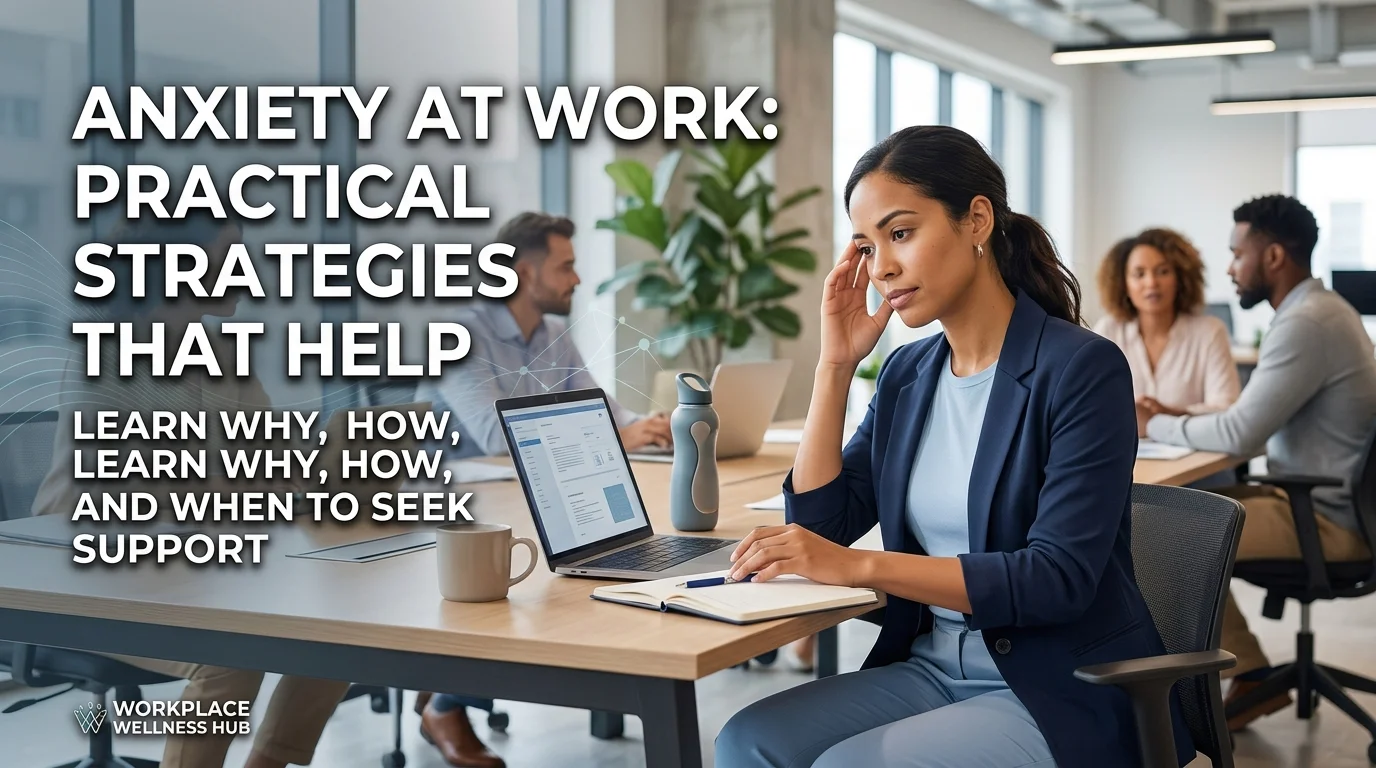
Some people feel it on Sunday evening, a tightening that has nothing to do with the weekend ending and everything to do with Monday’s inbox. Others feel it in the middle of a meeting, when a perfectly ordinary question from a manager sets off a surge of dread. Anxiety at work is common, and in Lebanon, where economic uncertainty and job insecurity add pressure to already demanding roles, it often goes unspoken because people feel they have no room to admit it.
This article looks at how anxiety tends to show up in a work setting, what keeps it going, and which strategies tend to help. It also covers when it makes sense to bring in professional support.
How Anxiety Shows Up at Work?
Workplace anxiety doesn’t always look like panic. It can be quieter and easier to mistake for a personality trait or a work habit. Someone who rereads every email five times before sending it, who avoids speaking up in meetings, or who stays late because leaving feels irresponsible may be managing anxiety without naming it as such.
Common patterns include constant worry about making mistakes, difficulty switching off after hours, avoiding certain tasks or conversations, a persistent fear of being judged or exposed as inadequate, and physical signs like a racing heart, tension, or trouble sleeping before work.
Anxiety and High Performance Often Coexist
One reason workplace anxiety goes unrecognized is that it can look like conscientiousness from the outside. A person may meet every deadline and receive good feedback while privately feeling exhausted and on edge. Performing well doesn’t mean the anxiety isn’t costing something. It often shows up later, in sleep, health, or relationships.
What Tends to Keep Workplace Anxiety Going?
Pressure alone doesn’t fully explain why anxiety persists. Several habits and beliefs tend to feed it. Overpreparing can feel protective but often reinforces the belief that things only go well because of the extra effort. Avoiding a difficult conversation brings short-term relief and lets the worry grow. Seeking constant reassurance calms things briefly but teaches the mind it can’t manage uncertainty without help.
The workplace itself can contribute as well. Unclear expectations, unpredictable demands, lack of control over workload, and a culture in which mistakes are punished all create conditions in which anxiety thrives. Recognizing both the personal and environmental sides matters, because strategies that address only one often fall short.
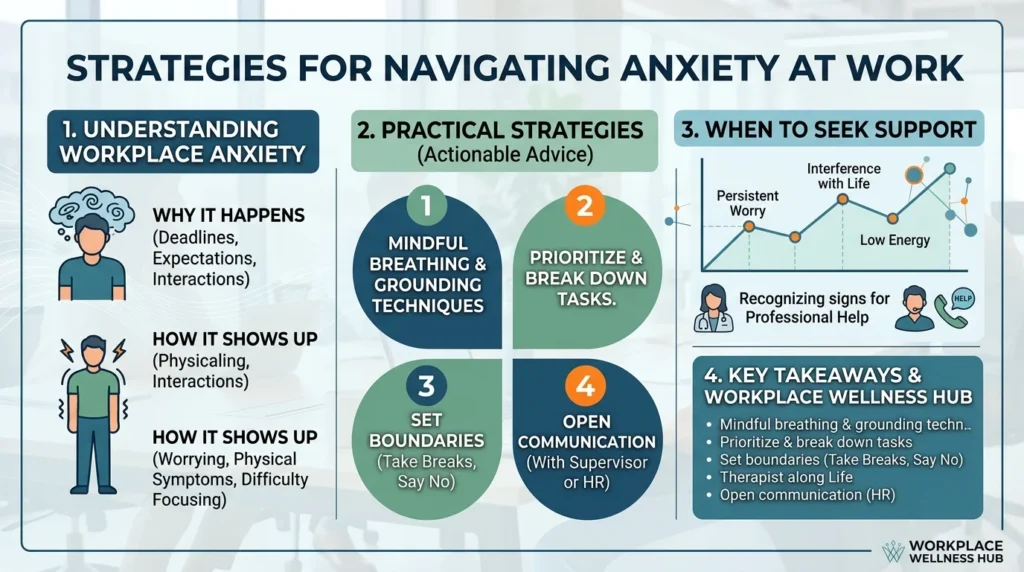
Practical Strategies That Can Help
None of these replace professional support when anxiety is significant, but they can make ordinary workdays more manageable.
Name what’s happening. Saying to yourself “this is anxiety, not evidence that something is wrong” can reduce the sense of threat. Anxiety presents ordinary situations as emergencies, and labeling it creates a little distance.
Break the avoidance cycle in small steps. If speaking in meetings feels frightening, start with one brief comment rather than avoiding meetings altogether. Facing a feared situation in manageable doses tends to reduce its hold over time, while avoidance tends to strengthen it.
Question the catastrophic prediction. Anxiety often forecasts the worst outcome with great confidence. Asking what is most likely to happen, and how you would cope if the worse outcome occurred, tends to shrink the prediction. This is a core idea in cognitive behavioral therapy.
Create a boundary around the end of the day. A clear closing routine, such as writing tomorrow’s priorities and then closing the laptop, gives the mind a signal that the work is paused rather than unfinished.
Pay attention to the basics. Sleep, regular meals, movement, and breaks all influence how reactive the body’s stress response is. They don’t cure anxiety, but neglecting them makes it louder.
When Anxiety at Work Needs More Than Self-Help?
Self-management has limits. It may be time to speak with a professional if anxiety has lasted for weeks or months without easing, if it’s affecting sleep or physical health, if you’re avoiding work tasks or calling in sick because of it, or if you notice panic symptoms. The same applies if worry has begun spilling into your relationships and life outside work.
A psychologist can help work out what’s driving the anxiety. It may be a specific pattern of thinking, a perfectionism that’s become unsustainable, an unhealthy work environment, or a combination. From there, support is tailored to the actual cause rather than generic advice. Individual psychotherapy offers a space to work on this directly.
When the Problem Is Bigger Than One Person?
If you manage people or work in HR and notice anxiety and strain spreading through a team, it may be a sign that something in the way work is organized needs attention. Individual coping skills only go so far when the environment keeps producing the same stress. Structured sessions such as corporate mental health workshops can help teams understand stress, build healthier communication, and recognize when colleagues need support.
Frequently Asked Questions
Occasional anxiety about deadlines or performance is normal. Constant anxiety that follows you home, disrupts your sleep, or makes you dread going to work is worth taking seriously, because it suggests the stress response is staying switched on rather than settling after pressure passes.
Stress usually tracks a specific demand and eases when the demand passes. Anxiety tends to persist beyond the situation, spreads to other areas of life, and often involves worry that feels out of proportion. A psychologist can help you assess which applies to you.
That’s a personal decision and depends on your workplace and your comfort level. Some people find that an honest conversation leads to useful adjustments, while others prefer to seek support privately first. A therapist can help you think through the options without pressure either way.
It can. Anxiety can affect concentration, decision-making, and confidence, and it can lead to overworking, avoidance, or exhaustion. Many people perform well on the surface while paying a significant personal cost, which is why performance alone isn’t a reliable indicator of how someone is coping.
Yes. Even when the job itself is a major source of stress, therapy can help you manage your response, set boundaries, challenge unhelpful thinking patterns, and decide what changes to make. It can also help you work out which parts of the situation are within your control.
Take the Next Step
If anxiety at work has become a constant presence, you don’t have to keep managing it alone.
Book a Consultation to talk with Yusra Imad about individual psychotherapy, or explore corporate mental health workshops if this is affecting your team.