
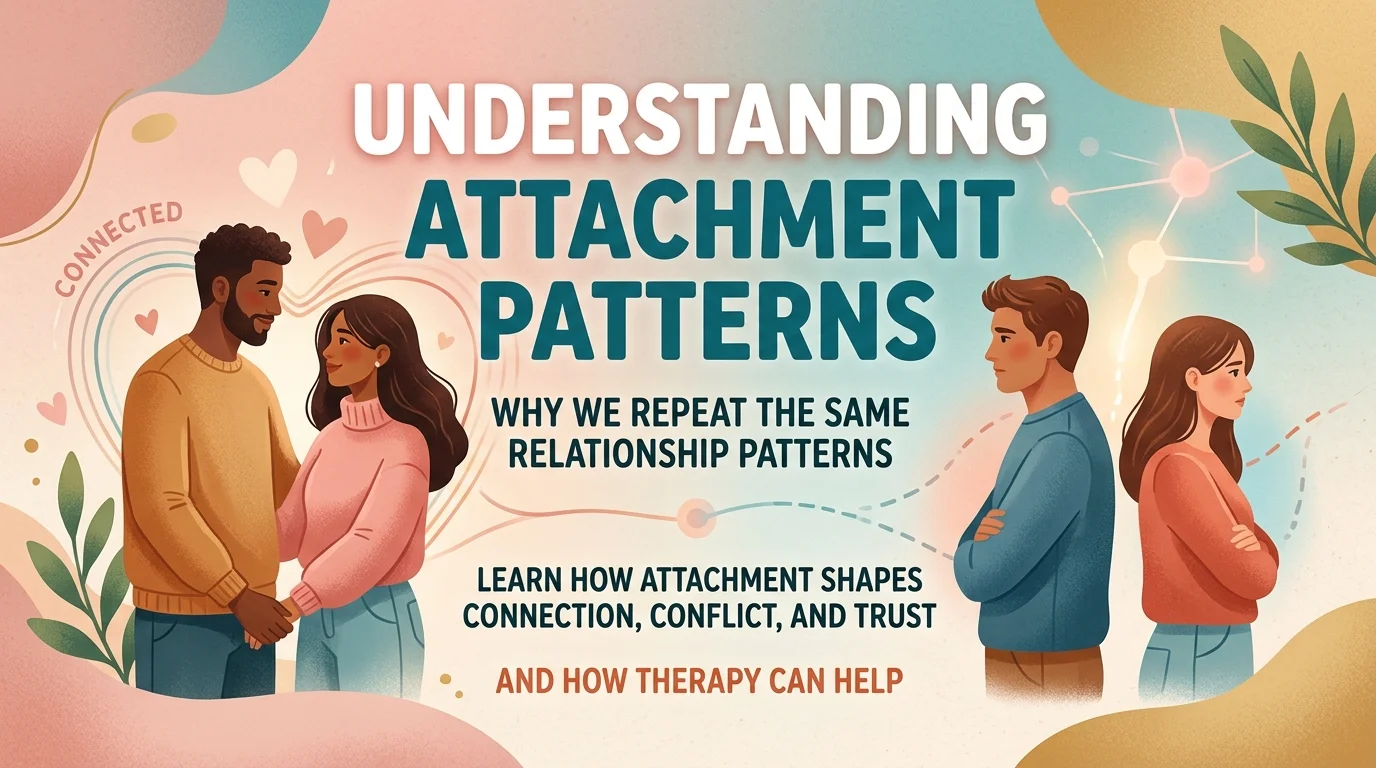
Others may feel it when they go through the third relationship of the same shape. Others sense it in one of their longest relationships, how one type of distance or one type of conflict continually reappears, no matter who they are in. The succession of these patterns is not a coincidence nor is it a character flaw. They are frequently linked with attachment — the early, intense schemas that influence our patterns of relating with others, conflicts, and trust.
This article examines what attachment patterns are, how they are likely to manifest in adult relationships and how they can create the opportunity for actual change.
What are Attachment Patterns?
Attachment theory refers to the influence of early relational experiences, especially with primary care-takers on one’s basic assumptions about “attachment” and “safety” in relationships. As a result of these initial experiences, a template emerges: Closeness can be safe or risky, needs will be needed or denied, conflict can be dangerous or something to be managed.
This template doesn’t remain in childhood. It often follows into adulthood, and affects approach to sex, how to relax into intimacy, what kinds of feelings are familiar, etc. etc. with an adult partner, even if those dynamics aren’t particularly healthy.
One of the main concerns is familiar isn’t the same as healthy.
One of the more confounding secrets of attachment styles is that many people choose to be attached to what feels familiar to them, even if it is not healthy for them. For instance, if one parent is emotionally unavailable, the child may feel comfortable in relationships with other emotionally unavailable partners, not necessarily because they wish this to be, but because they have an internal blue print of relationships with emotionally unavailable partners that they have developed without being aware of it.
Recognizing The Impact of Attachment on Adult Relationships.
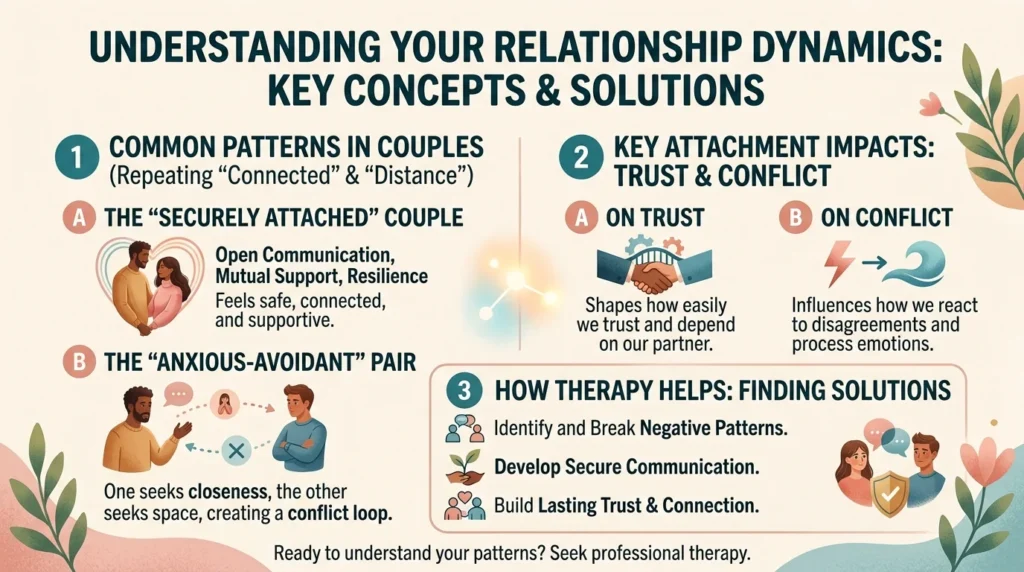
These attachment patterns are most likely to become apparent when the person is feeling distressed, either with conflict or when separated. If one’s pattern is towards anxiety in relationships, he or she may need constant reassurance, feel very upset when partner is away, or may take rejection cues from situations which were not intended to be rejections.
Again, someone with an avoidant type may find closeness uncomfortable, draw back when the relationship gets closer, or be unable to ask for support when they need it. No one chooses one of these patterns, and the majority of people exhibit some mixture of patterns.
What causes repetitive behaviors?
One of the most often reported and continually toxic things that happens in relationships is that the same code of conduct is observed in various relationships with different people as if it doesn’t matter with which person it occurs. This is because the underlying pattern is not one of any one partner. It’s the internal expectations that a person puts in all relationships that govern how they understand their partner’s actions and how they react to it, and that they’re doing this without realizing that they are doing it.
This is where it can be helpful to know when and where to find these patterns. Being aware that a reaction is from a past template – not only related to the current relationship – opens up room to react differently.
How Therapy works on attachement patterns?
In general, working with attachment patterns will include discovering the type of pattern, where it may have originated, and how it is still influencing the present relationship. No blaming the past, or people who created the pattern. Building awareness of this pattern until it appears, and then breaking it before it happens by itself.
This kind of work often benefits from an approach that looks beyond present-day symptoms to the deeper relational patterns underneath them, which is central to the analytical-systemic approach. For patterns specifically affecting a current relationship, this understanding often connects directly into couples therapy, where both partners can explore how their respective patterns interact.
Can Attachment Patterns Actually Change?
Yes, but it’s usually slow. The first change is in awareness, as this is where one notices a pattern, not just afterwards. From there, it is often the case that it takes repeated practice of the alternative response, typically in the context of a supportive relationship (or therapeutic relationship), until the new pattern begins to seem more comfortable than the old one.
Frequently Asked Questions
Yes. Relationships during early years set the template for early expectations of closeness, trust and safety that often influence later relationship patterns, even when the individual does not explicitly link the patterns to his or her early experiences.
The anxious pattern typically includes an intense desire to be close and feel secure, and an increased reactivity to others’ distancing and/or rejection. In an avoidant pattern, people may not feel comfortable being close with others and tend to avoid close relationships when they feel the closeness would be too overwhelming. The general population does not display a solid pattern of tendencies – most individuals exhibit a mixture of tendencies.
Yes. There are many couples with different patterns and it doesn’t necessarily present a problem. It is more important to be able to understand their own pattern and each other’s pattern and communicate, rather than to react in a routine way when the pattern is called up.
No. The early patterns are strong, but are not set in stone. Patterns can meaningfully change throughout ones life, with awareness and consistent practice, sometimes with therapy.
It is helpful to see if the same pattern has occurred with many relationships/have occurred across several relationships (with different partners). This repetition is often indicative of more of a pattern that is not necessarily directly connected to one particular relationship. A therapist can help explain what might be causing your unique circumstance.
Take the Next Step
If the patterns described here sound familiar, understanding them more deeply is often the first step toward changing them.
Book a Consultation to explore these patterns with Yusra Imad, through the analytical-systemic approach or couples therapy where relevant.