
I’ve never heard anyone say that they had a hard week, a busy month, or a long day and not use the word “burnout. If you use it like that, it ceases to have what it actually means as a known form of fatigue that develops over time, and can’t be cured with a weekend vacation. That’s important, because there are different ways to get out of ordinary tiredness, and then there’s a way out of real burnout.
This article will examine the nature of burnout, the signs that it often presents, when it’s a good idea to discuss it with someone, and what it really is.
The truth about Burnout.
Burnout is typically defined as physical, emotional and mental fatigue resulting from ongoing, unrelieved stress, usually from work-related stress, but not always. It’s not a bad day or week. It’s a buildup of demands on a person’s ability to recover, on a cumulative basis over weeks or months, until the person is no longer able to recover from demands by resting the way they normally do.
The difference between burnout and regular fatigue is non-recovery. A “tired” person will feel better when getting a good sleep or taking a day off. When someone is burning out, he or she doesn’t – it just does not go away when the pressure is relieved; it is not a fatigue issue anymore. It has to do with depletion that occurs over a period of time faster than it can be replenished.
Burnout is NOT just about workload!
It can be easy to assume that burnout is necessarily a time-related issue, but it’s not. It can vary widely from one pair to another based on the level of control they have over the assignment, their feeling that their work is being acknowledged, the amount of support they have around them, and what else is going on in their lives, at the same time. Which is why it’s not just about working less to beat the burnout; sometimes it has to be done more directly.
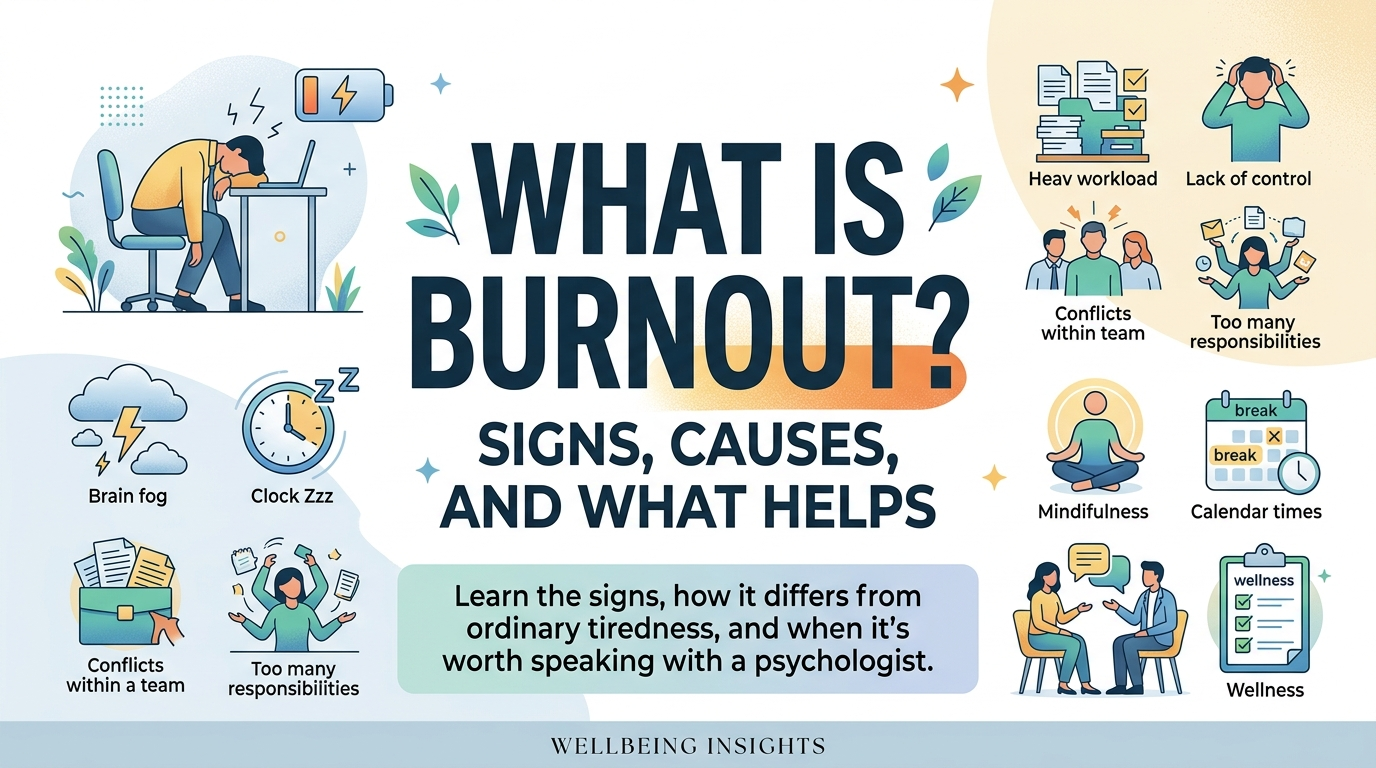
Here are some of the signs of burnout.These are signs of burnout.
Burnout frequently manifests in three interrelated areas: tiredness, emotional disconnection, and diminished effectiveness.
- Fatigue that does not abate despite sleep
- Decreasing interest or engagement in tasks, coworkers or duties
- A sense that you’re accomplishing less, even when working just as hard
- Trouble paying attention, or a significant decrease in motivation
- Physical reactions such as headaches, inability to sleep or not being able to fight off infections.
Not all people will have all of these symptoms, and some people will have more of one symptom than another. Sometimes it’s the cynicism that is first noticed – a heightened irritability or uninvolvement with work that is new. Others see the physical strain and don’t think about the psychological strain.
What are the reasons for burnout?
Burnout typically creeps up on you over time, which is another reason why it is hard to recognize until it’s pretty advanced. Common factors are when a person works long hours without time off, when their work is not being rewarded, when they have no control over what they do, when they don’t know what they are supposed to be doing and when they are not getting support from other people they work with or their supervisors.
It doesn’t just apply to jobs that are hard to do! The loss pattern may result from caring for others, from long periods of stress in one’s own life, as well as from caring for others informally, even though unpaid and with a great deal of emotional involvement.
The difference between burnout and normal stress.
Stress is related to Burnout but is not the same. Stress tends to involve feeling overwhelmed by too much — too many demands, too little time. It often comes with a sense of urgency and is usually relieved when the pressure is removed.
Emptiness is a more common symptom of burnout than overwhelm. The need becomes less intense, sometimes more like a sense of indifference, or even a sense of weariness that is not relieved by a mildening of the pace as is normal under stress. Realizing it is one or the other, since they require different actions.
Identifying the indicators for when it’s time to talk to someone
Some of the patterns tend to point to burnout being beyond a vacation or a schedule change: Fatigue has been ongoing for several weeks or months even after resting Feels as if work or responsibilities are constantly overwhelming You have seen a significant change in cynicism, detachment or loss of motivation The fatigue is affecting relationships, sleep or physical well-being If some of these sound familiar, it’s a good idea to talk to a psychologist, and not wait for things to get better on their own.
What Support for Burnout can look like:
When working with a psychologist to overcome burnout, it’s important to understand what’s actually causing the burnout, and not just the outward symptoms, as it could be a workplace dynamic, unclear boundaries, over-committing, or something you were not even aware of which the burnout is revealing. The work then typically involves helping to establish healthy boundaries, helping someone to recognise their thoughts patterns that keep them from mindfully pushing beyond their limits and finding a way back to true recovery instead of temporary relief.
For burnout with a clear workplace dimension, organizations sometimes benefit from bringing in structured support directly, through corporate mental health workshops that address these patterns at a team level rather than leaving individuals to manage them alone.
If what’s described here feels familiar on a personal level, individual psychotherapy offers a space to work through burnout at its source, rather than just managing the symptoms.
Frequently Asked Questions
What is the difference between being burnt out and being tired all the time?
It is ordinary tiredness which normally improves with rest, a good night’s sleep, a day off, a lighter week. Burnout does not go away with rest: it is a state of being that is not caused by a short-term lack of something but is the result of a longer-term depletion of something.
Can you have burnout away from work?
Yes. The stress of caring for others, of having too many responsibilities in one’s own life, or of doing too much work with no support or relief can all lead to burnout, especially when the stress is continuous and never relieved.
What’s the time scale for recovering from burnout?
It doesn’t have to take place in chronological order. The rate of recovery is determined by how long the burnout has been developing, the underlying causes and whether they are being dealt with or they are merely being put off. For some, changes can make a difference within a few weeks; for others, particularly if they have suffered from burnout for a while, it will take a longer time.
Burnout is a recognized mental health disorder?
While burnout is typically viewed as a problem of work or of stress rather than a diagnosis, it can be a big problem affecting mental health and is frequently accompanied by anxiety or depression. When exhaustion is acute or chronic, it’s worth having it evaluated properly, not assuming it is “just burnout.
If I feel like I could be burned out, what is my first step?
First, be truthful and honest with yourself about how long the exhaustion has been there and if rest has helped. After weeks or months of no improvement it’s OK to talk to a psychologist if you think you need to know what it’s about and what might help.
What Is Burnout? Signs, Causes, and What Helps?
Take the Next Step
Burnout tends to get worse the longer its underlying causes go unaddressed, but recognizing it early makes a real difference in how manageable it is to work through. You don’t need to wait until it’s severe to have the conversation.
Book a Consultation to talk with Yusra Imad about individual psychotherapy for burnout, or learn more about corporate mental health workshops if this is showing up across your team.