
Trauma is typically seen as a dramatic, one-off event, one that is easily recognisable, that has a ‘before’ and an ‘after’. That sometimes is just it. Trauma can also accumulate in a more subtle way, from longstanding challenging situations, from an accumulation of minor injuries, or from a situation that the person did not initially consider to be traumatic. Both are true and both can influence the way a person thinks, feels, and acts well after the initial events have passed.
This article examines what trauma is, how it manifests in the mind and body and when it might be considered to seek professional advice regarding it.
What Trauma is REALLY!
Trauma is a psychological and physiological response to an experience or series of experiences which are so overwhelming for a person that they could not cope with at the time. It is not just about the nature of the event itself, but also how traumatic it is to the individual who experienced it, depending on circumstances, available support at the time of the event and personal factors that may not be apparent on the outside.
The difference between trauma and memory that is difficult or painful is the ongoing response of the nervous system to the memory. Traumatic experiences can remain in the body and mind in an ongoing state of hypervigilance, as if there is no safe place for them to settle even when there is, and they do not get processed or integrated in the normal manner over time.
Trauma isn’t always a single event.
Trauma can also be the result of continuous or repeated exposure to challenging situations without the adequate support – such as an unstable environment, an unsafe relationship or ongoing stress with no support. Sometimes called “complex” or “cumulative trauma,” this may not be easy to pinpoint exactly since there is no clear moment in which to point.
How Trauma Affects the Mind?
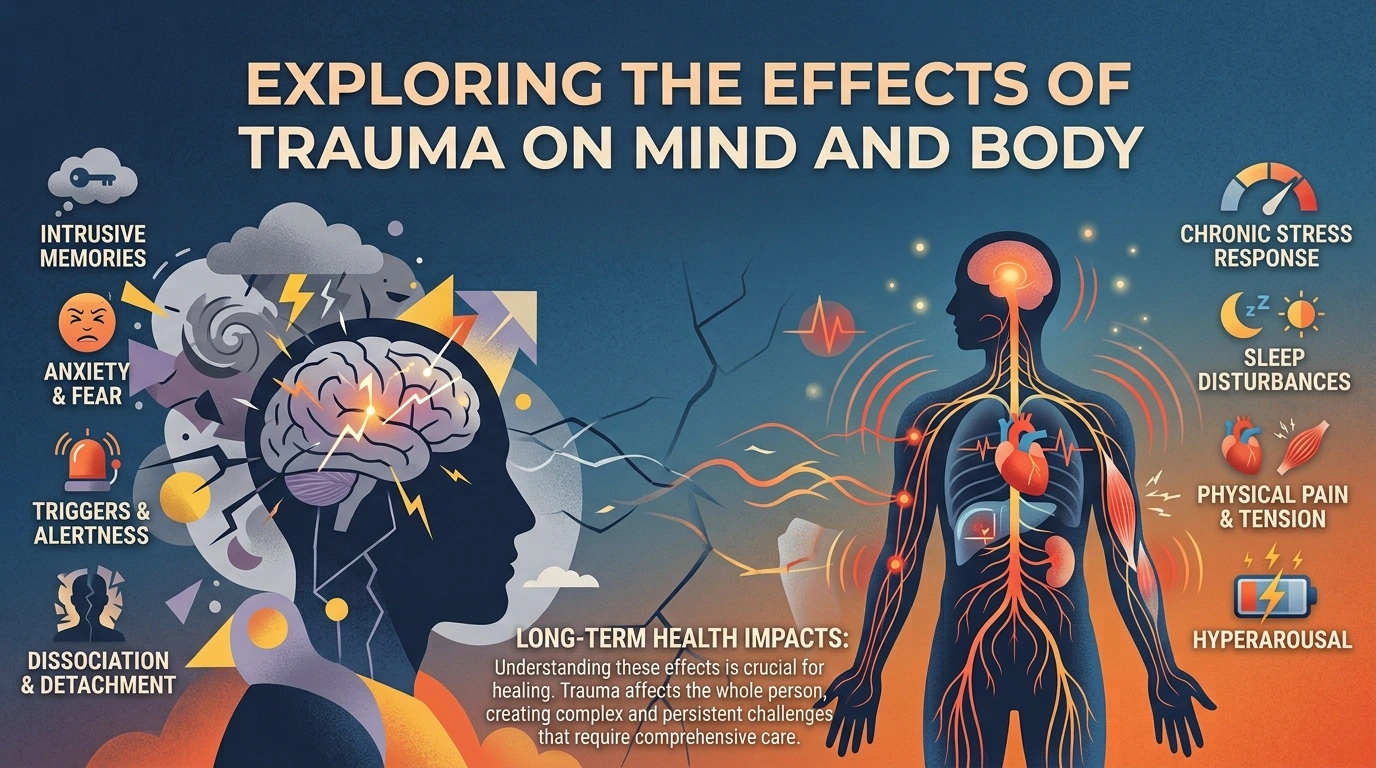
Trauma impacts a person’s memory, attention, and self and interpersonal relationships on a psychological level. Memories can be intrusive or hard to manage, coming to the forefront in one’s thoughts, images or dreams without warning. Others see something different — a sense of numbness or emotional detachment, as if some feelings have been detached.
Trauma can alter beliefs around safety, trust and self-worth that go beyond the initial trauma, and can impact relationships, decision making and self-perception long after the situation that caused the trauma has changed.
How Trauma Impacts the Body?
Trauma is not just a mental phenomenon, it also has a physical aspect. The stress response of the nervous system can be on going even after the actual stress is over, resulting in symptoms such as trouble sleeping, a greater startle response, ongoing muscle tension or feeling on edge.
There are also people who experience fatigue, stomach problems or other physical issues that seem to have no medical cause, and are symptoms of trauma. This mind-body connection is not an incidental by-product of the clinical understanding of trauma, but is well-established.
There are indications that trauma may be present.
Responses to trauma are quite variable, but some are seen frequently:
- Intrusive memories, images, or feel of reliving some parts of the experience.
- Trying to avoid people, places, or situations that remind of what occurred.
- A larger response to startling or a general sense of being on alert.
- Feeling detached or not feeling attachment to others
- Trouble sleeping, trouble focusing or physical stress that doesn’t seem to be connected to anything
Not all individuals who have had some challenging experiences will exhibit these patterns, and it does not eliminate the fact that the experience was important. How one reacts to trauma is dependent upon a number of factors other than just the trauma itself.
When It May Be Time to Seek Support?
It’s a good time to reach out to a professional if symptoms of trauma have lasted longer than a few weeks, are interfering with functioning or relationships and/or impacting feeling safe. This is particularly the case when avoidance has begun to influence decisions made on a daily basis in ways that are perceived as constricting, or if intensity of these reactions has not decreased over time.
When stress levels are high or appear to be too much to handle, it’s important to connect with a mental health professional as soon as possible and if there is an immediate safety concern, it is best to contact a crisis line or emergency services directly.
What is the value of a trauma-informed response to trauma?
When working with a psychologist about trauma concerns, it usually begins with creating a sense of safety and stability, and then gradually moves on to dealing with the more challenging content. This work is not done in a standard fashion, but is usually adapted to the individual’s capabilities.
Support can involve exploring the trauma responses, processing the beliefs and patterns that arose because of this trauma, and slowly restoring a sense of safety and trust with oneself, others and the ability to cope.
If aspects of what’s described here feel familiar, individual psychotherapy offers a space to work through trauma-related experiences at a pace suited to your circumstances, with appropriate professional support.
What Is Trauma? Understanding Its Effects on Mind and Body
Frequently Asked Questions
What’s the difference between trauma and PTSD?
Trauma is in fact the psychological and physiological response to an overwhelming experience, whereas PTSD (post-traumatic stress disorder) is a clinical diagnosis with a specific pattern and time course of symptoms after trauma. Some people will have trauma without developing PTSD, while others will have PTSD after being traumatised and a trained professional would need to make the diagnosis.
Is it possible for trauma to impact a person when they cannot recall an event distinctly?
Yes. The body’s stress response can be triggered by events that may not be fully recalled, especially those that happened during a stressful time or early childhood development. Trauma responses aren’t dependent on having a complete or clear memory of the original circumstances.
Does trauma always occur immediately after the trauma event?
Not necessarily. Trauma responses may be immediate or may appear weeks, months, or even years after the trauma, sometimes seemingly provoked by another trigger, such as a different life circumstance or event.
Can someone recover from trauma without professional help?
Some people do experience natural improvement over time, particularly with strong personal support and no ongoing exposure to distressing reminders. However, persistent or significant trauma symptoms generally respond better to professional support, which can address patterns that are harder to shift alone.
Is it normal to feel fine after a difficult experience and then struggle later?
Yes, this is a recognized pattern. Trauma responses don’t always follow a predictable timeline, and delayed reactions are common. Feeling composed initially doesn’t mean the experience had no lasting impact.
Take the Next Step
Trauma responses don’t resolve simply by trying to move past them, and there’s nothing to be gained by managing them alone longer than necessary. Understanding what’s happening is often the first useful step.
Book a Consultation to speak with Yusra Imad about individual psychotherapy for trauma-related concerns.