

When you start searching for a trauma therapist in Lebanon, you may have tried to deal with it on your own for quite some time; busy yourself, ignore certain things, tell yourself that even though it was a long time ago, it shouldn’t still be affecting you this much. There are times when trauma doesn’t happen on that sort of schedule, and needing professional help is not a failure. When the answers that come up are more entrenched than simply changing your will, it is a good indication that this is going to be tricky.
This article provides insight on what is really meant by therapy for trauma, how it may go, and what you can look for when you’re searching for the right intervention.
What “Trauma-Informed” REALLY means?
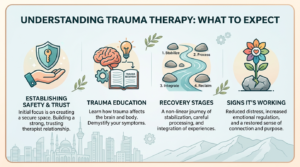
Trauma-informed therapy isn’t a one-size-fits-all therapy — it is an approach that takes into account how trauma can impact the nervous system, memory, and sense of safety, and then adapts the speed and format of therapy to suit. Trauma-informed work does not immediately dive into discussing hard material but establishes some stability and trust first, as it can be overwhelming or even counterproductive to try to process trauma before this has been created.
This is because the initial part of treatment may not be as dramatic as one would think. Then there is a time of understanding what has been going on, laying a foundation for emotional regulation, and then, over time, moving towards the more challenging content — and at a pace appropriate to what the person can manage.
Why Pacing is so important in trauma work?
Traumatic material can be pushed in too fast, before there is sufficient coping, and can thus be retraumatizing, not therapeutic. That’s why it’s important for trauma-informed therapists to take their time, and why it feels like it takes longer than it does to get better in the beginning. This slower speed is not a delay; it’s a safety factor and an effective factor.
Tips on the typical aspects of trauma therapy.
The content will depend on the person and their issues, but in trauma-focused work this typically involves learning about the trauma and understanding its effects, challenging the assumptions and patterns that have developed since the trauma, and practicing skills for coping with the symptoms of trauma, such as intrusive memories, hypervigilance, avoidance, and more.
Trauma is physical as well as emotional/mental, so therapy may involve paying attention to the physical aspect of trauma (how it is felt and experienced) in addition to focusing on the mental/cognitive aspect of trauma.
There are certain indicators that can help you determine whether it’s time to seek the services of a trauma therapist.
There are some patterns that indicate that professional assistance might be needed:
- Intrusive memories or feeling like they are reliving parts of the challenging experience
- Continued avoidance of persons, places or situations related to the event that occurred.
- Continued hypervigilance, difficulty sleeping or emotional detachment
- Symptoms that have lasted more than a few weeks and aren’t easing with time
Usually talking about these problems is a good time to seek help, if they are having an impact on relationships, work, or your overall sense of safety.
The first sessions are crucial, so you should know what to anticipate.
The first few sessions with a trauma therapist will concentrate on developing a comprehensive picture of your experiences and symptoms and on setting up some basic coping skills, rather than going straight to more challenging areas. You will not have to tell everything all at once — a good trauma-informed approach will keep in mind that not everyone is ready to hear the details at once and will take things at a pace that is tolerable for you.
You can trustfully share with your therapist what you can and can’t handle, and this is a strategy that is helpful in the work, and often encouraged.
This is the ideal time to make the right selection.
When searching for a trauma therapist, you may ask them specifically if they have experience dealing with trauma, and how they plan to pace/structure sessions in the initial stages of therapy to ensure safety. In trauma work, the working relationship is key, as in the process it is always about trust.
It is a good idea to meet with a counselor for a short trial period before you start regular counselling before you make a long-term decision.
If what’s described here resonates with your situation, individual psychotherapy offers a space to work through trauma-related experiences with appropriate professional support, at a pace suited to your circumstances.
Trauma Therapist in Lebanon: What to Expect?
Frequently Asked Questions
What is the difference between trauma therapy and talk therapy?
Because trauma impacts the nervous system’s stress response, trauma-informed therapy is very sensitive to pacing, safety, and stabilization, before engaging with challenging material directly. While general talk therapy can address trauma-related concerns, a trauma-informed approach is tailored specifically for those concerns.
Should I tell people at length about the traumatic event immediately?
No. A trauma-informed approach typically empowers stability and coping skills first, and then delves into the specifics of challenging content when they are ready. No need to reveal anything more than you can handle at any one time.
Typically, how many months or years will trauma therapy last?
No set time limit. It will vary depending on the type of trauma and the length of time it endured, coping mechanisms that are already in place and the person’s reactions to the speed with which the work is undertaken. For some, it takes months for there to be significant change; for more complex or prolonged trauma, it may take longer.
Is it possible to help with trauma therapy even if the event occurred a long time back?
Yes. The reactions to trauma may last for years and they may not be able to fully make the link between the current symptoms and a past trauma. No matter how long ago the initial trauma occurred, therapy is beneficial.
If I am not certain if what I have experienced is “trauma,” then what?
It’s a common uncertainty, and that doesn’t require explanation prior to contacting the person. You don’t need to first determine if what you’ve experienced fits into a certain definition or not, a psychologist can help determine what you’ve experienced and how it may be affecting you.
Take the Next Step
There is nothing that can be done in isolation, such as waiting or working through a trauma response; there is no need to be all the way “figured out” before seeking assistance.
Book a Consultation or reach out on WhatsApp to talk with Yusra Imad about individual psychotherapy for trauma-related concerns.