
A very popular myth is that couples therapy is a time of last resort to be considered when a relationship is in real trouble. But in reality, most couples wait much longer than they should before going to anyone; usually they don’t know if what they’re feeling is “bad enough” to warrant going to someone.
This article examines some indicators that may suggest couples therapy is needed, and why it is preferable to get couples therapy sooner rather than later.
RESOURCES NO FIXED THRESHOLD
We have a certain idea that couples therapy needs to occur because there’s a crisis: an affair, a big betrayal, a decision to part ways. That is the time some couples make their way into therapy and it can still assist. But others come because there’s been a persistent common problem, poor communication or they’ve seen a persistent issue that is ongoing and unaddressed.
There is no list of items that can be checked and say “now is the time. The important thing is, whether the difficulty is a consistent, un-resolved pattern more than an occasional disagreement and whether you both feel stuck in attempting to resolve it on your own.
Waiting seldom makes it easier
One of the common themes is procrastination, waiting for therapy until it is really uncomfortable. Contacting early means there’s more time for the work to be smoother and when partners are more flexible and willing, but therapy can also be helpful later.
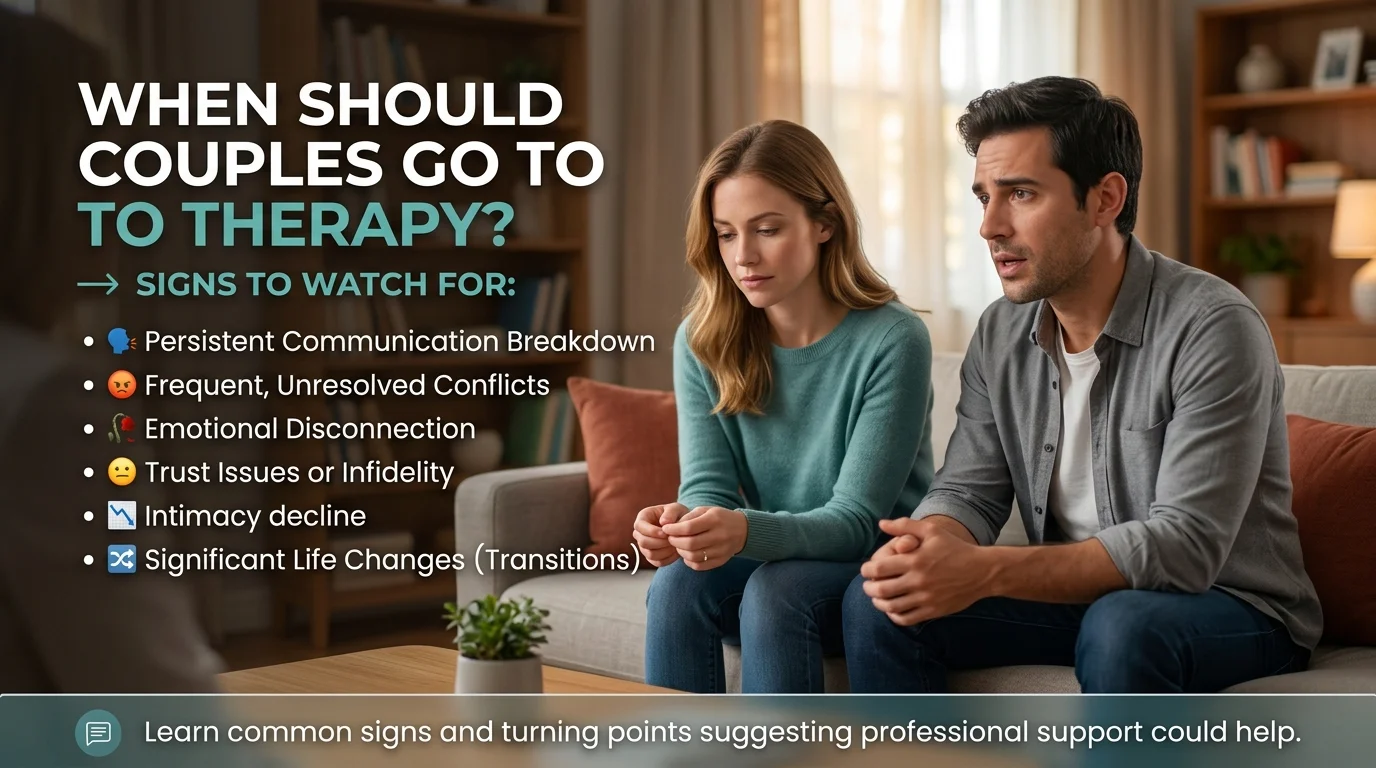
Typical signs that may indicate when it’s time:
Some common scenarios emerge for couples who choose to get help:
- This argument comes in over again every time, whichever way it is solved.
- Discussions on some issues always become confrontational or are sidestepped entirely
- One or both partners are emotionally distant, despite sharing a daily home
- Trust has been damaged due to a particular event, or a gradual deterioration in attitudes.
- You feel you’re talking at instead of talking to them.
If more than a few of the above read like a familiar script, signaled is it as if the games under the surface are what is really at issue.
Life Transitions Are a Common Turning Point
Couples therapy is not just for couples fighting. Sometimes couples need help when certain life events put additional stress on the relationship — when a child is born, a significant career change occurs, a move takes place, families combine, or a health event happens. These transitions may bring up issues in expectations or in communicating that were not as clearly resolved prior to the transition, which can otherwise cause minor conflicts to become ingrained communication styles.
If One Partner is More Ready than the Other?
One partner is often keen on seeing a therapist even before the other is as eager. Therapy will not make no difference! The more reluctant partner may be afraid that he will be held responsible, may not feel the problem is serious, or just may not have thought about it. Raising it together as an attempt to understand the relationship rather than as a demand of those who are complaining, can sometimes make the idea seem more acceptable.
Even when one person isn’t willing, individual therapy can be helpful for the other person to process their internalized experience of the relationship, but it is another type of therapy than working on the relationship together.
Symptoms to Look for: Do You Need to Take Action Earlier than Later?
There are certain circumstances where faster action is warranted: a new violation of trust that has not been recognized or rectified; an escalating pattern of conflict that has started to seem more serious or more frequent; and a feeling that something is drifting further and further away – recognized by both partners, but not discussed directly. In such cases, it’s often better to have an earlier meeting that allows for more flexibility in future work.
You Don’t Need to Wait for a Crisis
When couples therapy is presented as a proactive option instead of a final option, more people are affected by this. Couples can receive professional help not just when it’s a major problem, but as soon as there is a pattern that’s starting to occur.
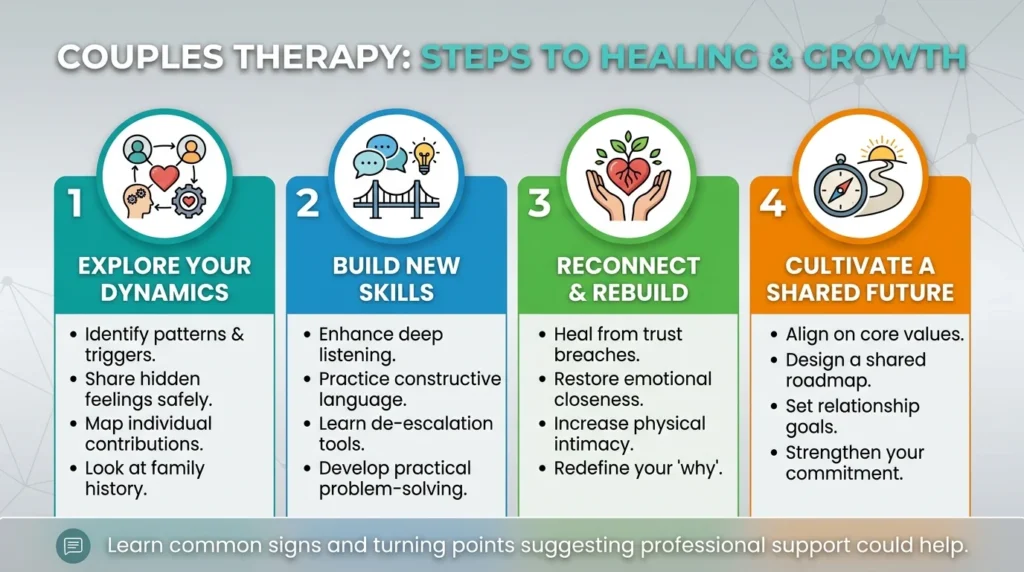
To understand more about what the process actually involves once you decide to start, see how couples therapy works or learn more on the integrative couple therapy page.
Frequently Asked Questions
No. A common point of therapy for couples is when they have a pattern they have failed to sort out and attempt to resolve before it becomes serious. Previous help may help to simplify the task.
If there is one conflict, that does not get resolved over and over, it may be a good reason to ask for help. A therapist can dig into what’s really going on with that pattern and determine it’s sometimes different than what it looks like on the surface.
Yes. Previous therapy not working out doesn’t mean therapy in general isn’t right for you. There are various factors of fit, timing, and readiness, and a different approach or a different moment in the relationship can be different.
Both can be of value. Some couples make the move to support each other proactively before the transition actually occurs, and others may do so after new conflict has arisen. There’s no bad time, but it is often helpful to address expectations early so problems can be avoided.
It’s a frequent occurrence. Discussing it as a partnership that needs to be strengthened instead of it being about one partner’s dissatisfaction can be helpful. If your spouse will not be joining in therapy, you are still able to have individual therapy to process your piece of the situation.
Take the Next Step
If any of this sounds familiar, reaching out doesn’t require things to be at a breaking point first.
Book a Consultation or reach out to talk with Yusra Imad about whether couples therapy could help your relationship.