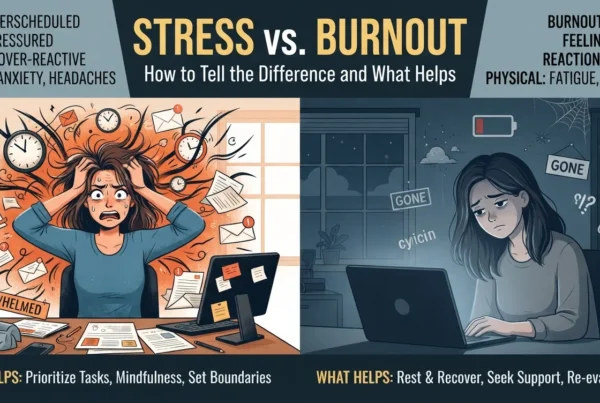

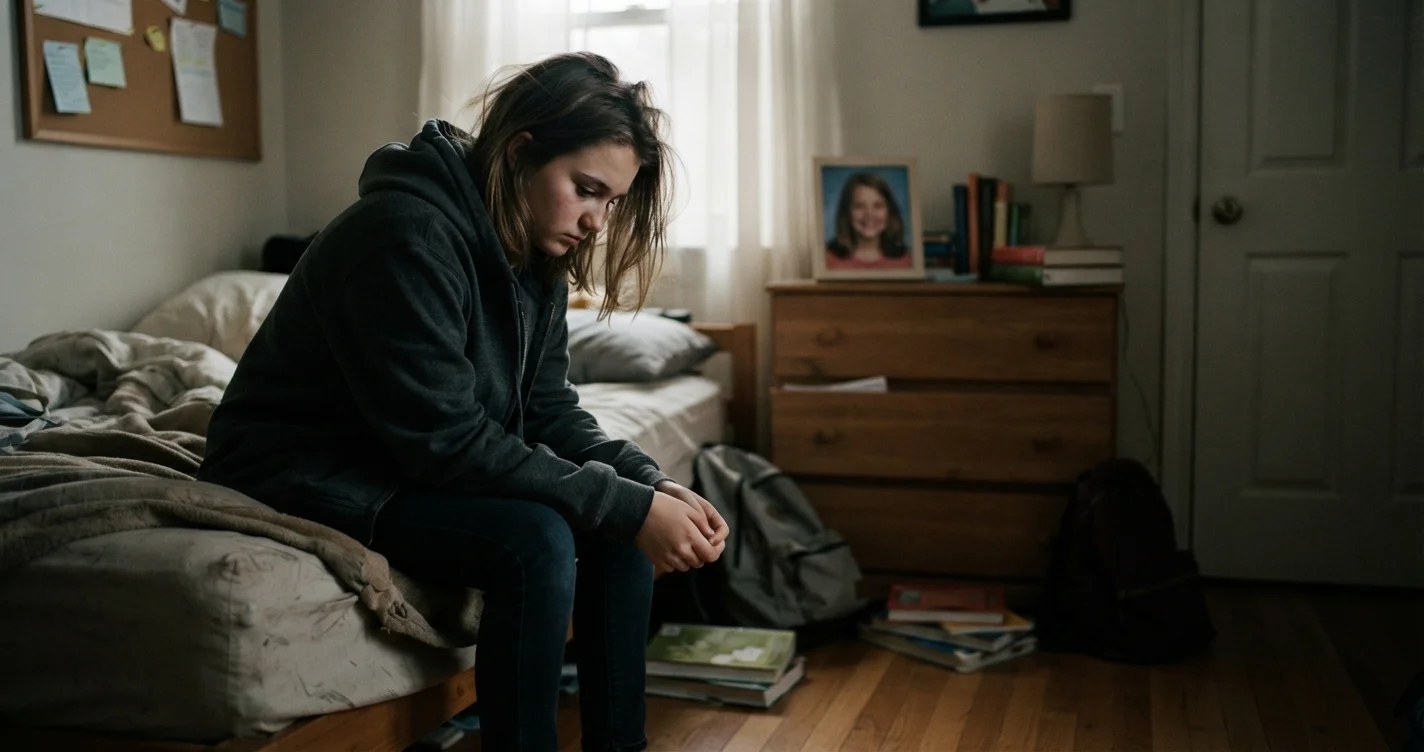
Your teenager used to talk at dinner. Now they answer in single words and disappear to their room. They snap at small things, sleep until noon on weekends and seem uninterested in friends they once loved. Part of you thinks, “This is just being a teenager.” Another part wonders whether something deeper is going on. That uncertainty is one of the hardest parts of parenting adolescents, because depression in teenagers often looks different from depression in adults and can easily be mistaken for ordinary moodiness.
This guide is written for parents. It explains the signs of depression in teens, why it is so often missed, what can contribute to it, when to seek urgent help, and how to talk with your teenager in a way that opens doors rather than closing them. It is not a diagnostic tool; only a qualified professional can assess your child. But it can help you know what to look for and when to act.
Depression in Teenagers or Normal Moodiness?
Adolescence brings real emotional ups and downs. Hormonal changes, brain development, growing independence and social pressures all make teenagers more sensitive and changeable. Occasional sadness, irritability, wanting privacy and testing boundaries are normal parts of growing up.
Depression is different in three main ways: how long it lasts, how intense it is and how much it affects daily life. Clinically, depressive symptoms persist for at least two weeks, most of the day, nearly every day. Ordinary teenage moods tend to come and go, and your teen still finds enjoyment in some things. With depression, the low or irritable mood lingers, interest fades across many areas, and functioning at school, at home or with friends begins to slip.
Signs of Depression in Teens
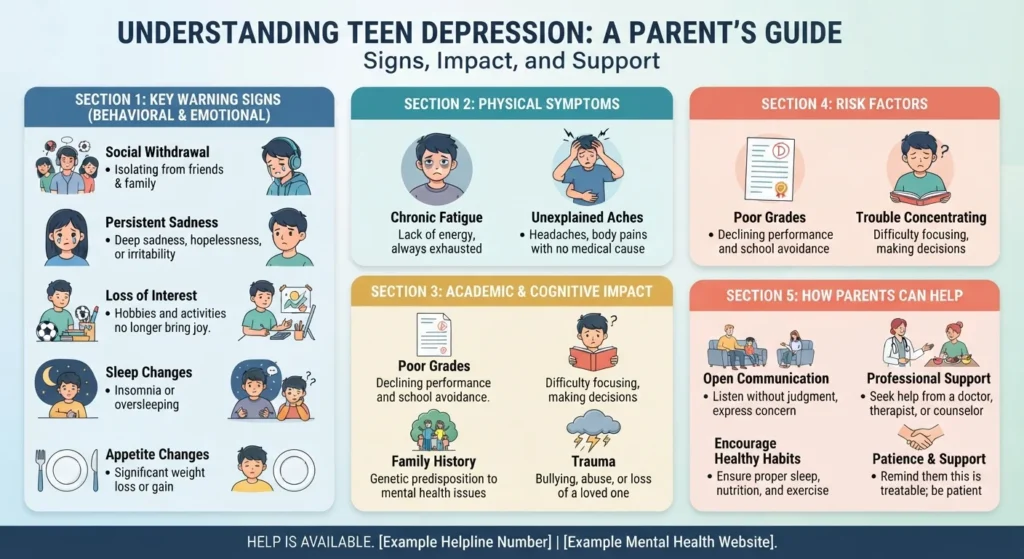
The signs of depression in teens usually appear as a cluster of changes rather than a single symptom. Paying attention to patterns over weeks is more useful than reacting to one bad day.
Emotional Signs
Persistent sadness, tearfulness or a sense of emptiness are common, but many depressed teenagers show irritability rather than visible sadness. The Diagnostic and Statistical Manual of Mental Disorders (DSM-5) specifically recognises that in children and adolescents, mood may be irritable rather than sad. Teens may also express hopelessness, worthlessness, excessive guilt or extreme sensitivity to criticism and rejection.
Behavioral Signs
Look for withdrawal from family and friends, loss of interest in hobbies or sports, spending far more time alone, increased conflict, or new risk-taking. Some teenagers turn to alcohol or other substances to numb their feelings. A drop in self-care, such as neglecting hygiene or appearance, can also be a sign.
Physical Signs
Depression often shows up in the body. Common physical signs include sleeping much more or much less than usual, changes in appetite or weight, constant tiredness, low energy, and frequent headaches or stomach aches without a clear medical cause.
School and Social Signs
Declining grades, difficulty concentrating, missed assignments, skipping school or avoiding social events are often among the first signs others notice. Teachers sometimes spot changes before parents do, so their observations are worth taking seriously.
In summary, the patterns most worth watching for include:
- Low or irritable mood that lasts most days for two weeks or more.
- Loss of interest in things they used to enjoy.
- Withdrawal from friends and family.
- Changes in sleep, appetite or energy.
- Falling grades, poor concentration or hopeless comments.
Why Depression in Teenagers Is Often Missed?
Several factors make depression in teenagers hard to recognise. Irritability and withdrawal are easily mistaken for attitude or ordinary adolescent behavior. Teenagers often hide their feelings, especially from parents, out of shame, a wish to appear independent, or fear of worrying the family. Some keep up appearances at school and with friends while struggling privately. Others express distress through anger or physical complaints, which can lead adults to focus on behavior rather than emotion.
Stigma also plays a role. In many families, including in Lebanon, mental health is still not openly discussed, and parents may hope the problem will pass on its own. The World Health Organization notes that around one in seven young people aged 10 to 19 worldwide experiences a mental health condition, yet many remain unrecognised and untreated. Noticing early makes a real difference.
What Can Contribute to Teenage Depression?
There is rarely one cause. Depression usually develops from a combination of factors, including family history of mood difficulties, temperament, stressful life events and ongoing pressures. Common contributors include academic stress, bullying or social exclusion, relationship difficulties, family conflict or separation, loss or grief, trauma, and chronic illness.
Teenagers in Lebanon may face additional pressures: demanding official exams, economic strain on families, uncertainty about the future, and in many cases friends or relatives moving abroad. These realities do not cause depression on their own, but they can add weight for a young person who is already vulnerable. Understanding the context helps parents respond with empathy rather than frustration.
When to Seek Urgent Help?
Some signs need immediate action. If your teenager talks about wanting to die or not wanting to be here, mentions harming themselves, shows signs of self-harm such as unexplained cuts or burns, gives away belongings, says goodbye in unusual ways, or seems to be losing touch with reality, seek urgent help. Contact local emergency services, go to the nearest hospital emergency department, or reach a doctor straight away. Do not leave them alone if you believe they are at immediate risk.
Many parents worry that asking directly about suicide might put the idea in their child’s head. Research does not support this fear; reviews of the evidence suggest that asking about suicidal thoughts does not increase risk and may offer relief. A calm, direct question such as “Have you been having thoughts of hurting yourself or ending your life?” can open a vital conversation.
How to Talk to Your Teenager About Depression?
Starting the conversation can feel daunting. Choose a calm, private moment, perhaps during a car ride or a walk, when talking feels less intense than a face-to-face sit-down. Begin with what you have noticed, without judgment: “You haven’t seemed like yourself lately, and I’ve been worried about you.” Then listen more than you speak.
Validate their feelings even if you do not fully understand them. “That sounds really hard” goes much further than immediate advice or reassurance. If your teenager does not want to talk, let them know you are available whenever they are ready, and keep checking in gently. Consistency matters more than getting the perfect words on the first try.
What Not to Say?
Well-meant comments can sometimes shut a conversation down. Avoid phrases like “Just snap out of it,” “You have nothing to be sad about,” “Other people have it worse,” or “It’s just a phase.” These can leave a teenager feeling misunderstood or ashamed. Similarly, try not to make their struggles about your own worry or disappointment, which can make them less likely to share in future.
An Illustrative Example
The following is a composite based on common patterns, not a real family. Adam, 16, had always been sociable and played basketball with his school team. Over a few months, his parents noticed he had quit the team, stayed in his room most evenings and was sleeping late into the afternoon on weekends. He became irritable when asked about school, and his grades dropped. When his mother pressed him, he said, “What’s the point anyway?”
Rather than arguing, his parents chose a quiet moment to share their concern and asked how he had really been feeling. Adam admitted he had been feeling empty for a long time and did not know why. With his agreement, they arranged an assessment. A psychologist met with Adam and his parents, and recommended individual therapy for Adam alongside a few family sessions to improve communication at home. Over the following months, Adam gradually returned to some activities and began talking more openly with his parents. The early, calm response made a significant difference.
How Professional Help Works for Teenage Depression?
If you are concerned, a good first step is a professional assessment. A psychologist can explore what your teenager is experiencing, consider other possible explanations, and recommend appropriate support. Our article on psychological assessment for teenagers explains what that process involves.
Clinical guidelines from the UK’s National Institute for Health and Care Excellence (NICE) recommend psychological therapy as a first-line approach for depression in young people. Options often include cognitive behavioral therapy, which helps teenagers recognise and change unhelpful thought patterns and gradually re-engage with meaningful activities, and family-based approaches that strengthen communication and support at home. For moderate to severe depression, a specialist may also consider medication, usually alongside therapy rather than instead of it; this is a medical decision made with a psychiatrist.
Seeking teenage depression help in Lebanon can feel overwhelming, but support is available. Yusra’s practice offers individual psychotherapy for adolescents and adults, family therapy to support parents and teens together, and collaborative care with psychiatry when medical input is needed.
Supporting Your Teen at Home
Everyday support matters alongside professional help. Encourage regular routines for sleep and meals, gentle physical activity and time outdoors. Spend low-pressure time together doing something your teen enjoys, without turning it into a conversation about their mood. Reduce criticism where you can, and notice and acknowledge small efforts. Keep communication with the school open if your teen agrees, so that teachers can offer understanding and flexibility.
Be patient with progress. Recovery from depression is rarely a straight line. Good days and bad days are both part of the process.
Looking After Yourself as a Parent
Supporting a teenager with depression can be emotionally exhausting. Worry, guilt and frustration are common, and many parents quietly blame themselves. Depression is not caused by a single parenting mistake, and seeking help shows care and strength. Make space for your own support, whether through a partner, trusted friends or your own sessions with a therapist. Looking after yourself helps you stay steady for your child.
Frequently Asked Questions
Ordinary moodiness comes and goes, and your teen still enjoys some activities. Depression involves low or irritable mood lasting most days for at least two weeks, along with loss of interest, changes in sleep or appetite, and difficulties at school or with friends.
Common signs include persistent sadness or irritability, withdrawal from friends and family, loss of interest in activities, changes in sleep and appetite, tiredness, poor concentration, falling grades and expressions of hopelessness or worthlessness.
Yes. Asking calmly and directly does not put the idea in their head, and it can be a relief for a teenager who is struggling. If they say yes or you are worried about their safety, seek urgent professional help immediately.
Some low periods pass, but depression often persists or returns without support. Early help can reduce its impact on school, relationships and wellbeing, and lower the risk of future episodes.
Psychological therapies such as cognitive behavioral therapy and family-based approaches are commonly recommended. The best approach depends on your teenager’s needs, which an assessment can help clarify.
Noticing Early Makes a Difference
Depression in teenagers can hide behind irritability, silence or a closed bedroom door, but it is treatable, and parents play a powerful role in recovery. Noticing changes, starting gentle conversations and seeking professional support early can help your teenager feel understood and find their way back to themselves.
If you are worried about your teenager, you do not have to face it alone. Learn more about family therapy in Lebanon, book a confidential consultation, or send a message on WhatsApp with any questions first.
About this article: This content is for general education and does not diagnose or replace individual assessment or treatment. It was reviewed by Yusra Imad, Licensed Clinical Psychologist and CBT Psychotherapist. If your teenager is in immediate danger or talking about harming themselves, contact local emergency services or go to the nearest hospital straight away.
Reviewed by Yusra Imad, Licensed Clinical Psychologist and CBT Psychotherapist in Lebanon.